


Forget the sequined jerseys and medal obsession of modern athletics. Before the existence of the International Olympic Committee, the original participants were in the sixth century B.C. Not to pursue fame or fortune as we understand it today. They fought for victory – and olive oil.
These weren’t the thin, full-time professional athletes who dominate the headlines today. They were ordinary artisans from a fragmented landscape that stretched from the Black Sea to Spain. They traveled to Olympia every four years. Why? To gain honor, political influence and social status. The victory was not just personal glory; it was a ticket to power in a world without a central government.
The games served two purposes. Of course it was all about competition for them. But more importantly, they were diplomatic tools meant to unite the Greek world and honor Zeus, the king of the gods.
Why did the ancient Greeks create the Olympics
The first officially recorded games were held in 776 B.C.E., but the roots go back further. Legends say that the first battle took place during the cosmic battle between Zeus and Kronos for control of Olympus. Later, the demigod Heracles organized a festival of sporting events in honor of Zeus after achieving a military victory over the city-state of Elis.
Historical information is scarce. What we know comes from archaeological remains and the writings of ancient travelers such as Pausanias and thinkers such as Herodotus and Pliny. The details are fragmented and often mythologized, but the core meaning remains clear.
A divided world needed a unifying force. Healthy competition provided the necessary support. It wasn’t a perfect system. There were scandals, sabotages and many selfish, ready-to-fight men in the stadium. But it worked. It gave people a reason to look beyond their local rivalries.
The stakes were personal
Who could achieve the ultimate victory? And who became the laughingstock of their hometown after the bitter defeat? There was an incredible amount at play. In some cases, the consequences of failure or fraud were severe. The spectators were not just passive observers; They were part of a tense, charged atmosphere where anything could happen. There have been reports of people being thrown off mountaintops for their behavior, a stark reminder that these games were as much about survival and prestige as sport.
Arena Marking: Melankomas and the Nemean Walls
The physical legacy of these games is still visible. At the Olympic Stadium in Nemea, the competitors left their mark on the walls of the tunnel leading to the arena. It wasn’t just graffiti; they were statements of identity and confidence.
The writings read like self-confident manifestos: “I will win.” “Akrotatos is handsome.” They reveal a culture that celebrates not only the act of winning but also the personality of the winner. These men were ordinary people who took on extraordinary roles and wrote their names in history – literally carved in stone.
The reality of an Ancient Competition
While the myths add spice, the reality was grim. By modern standards, athletes were amateurs who balanced work and training. Yet their commitment was unconditional. The price of olive oil was not just a lubricant for the body; It was a precious commodity, a symbol of divine favor. By winning, you increased your prestige in a society that valued strength, skill, and divine approval above all else.
The games reflected Greek society: competitive, hierarchical, deeply religious, and constantly on the brink of conflict. They offered a temporary truce, a space where enemies could compete under the watchful eye of Zeus, under rules that bound both honor and justice.
This was not just a sporting event. It was a cultural phenomenon that shaped the identity of the ancient world

Origin of games
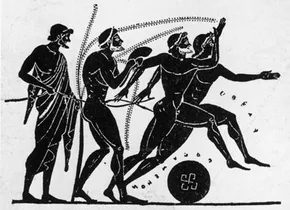
You might think that the Olympics started in 776 BC. It started with a bang, but the roots go deeper. Some ancient texts suggest that the Olympian games could have started as early as the 9th or 10th century BC. The place was Olympia, situated on Pelops – the western part of the Peloponnese peninsula in Greece. Another legend says that Pelops himself, after whom the peninsula is named, started the first games. According to Greek mythology, Pelops was the grandson of Zeus. His father killed him, offered his flesh to the gods for dinner, and the gods took pity and revived his young body. Pelops became a great warrior and is said to have been quite an Olympic athlete.
Why games were important
Whether Pelops created the games or not, Olympia is undoubtedly where it all began. It was a sacred city that attracted pilgrims to visit the temple of Zeus. The first Olympics started as a religious festival in honor of Zeus. Greeks came from all over to participate. Someone decided it would be a good idea to also honor mortals by showcasing their athletic skills. The Olympic Games had two goals behind them: to showcase the talents and development of young citizens and to bring Greeks together in a friendly, diplomatic environment. The games were not only a place for sports, but also a time for political meetings. In the turbulent warrior world, the Greeks used the games as an opportunity to build friendly relations with their neighbors and find allies.
Olympic Truce
Participants traveled from all corners of the Greek world to take part in the competition. They had to travel treacherous paths through enemy cities and deal with volatile politics. In the ninth century, the city-state of Elis came up with the idea of an Olympic Truce. The ceasefire, or Ekecheiria, called for a military cease-fire for all spectators and athletes. Heralds of Elis traveled from city-state to city-state to declare the official start of the Olympics and the truce.
The first official games
776 B.C.E. marked the first official Olympics. Like the modern Olympics, they were held every four years. The organizers added new events and recruited more participants. The event that started as a one-day event lasted five full days. Events were held in the stadium, which could hold over 40,000 people, or in the Hippodrome, a large flat field. As the Olympics grew, gymnasiums were built for training and accommodations were constructed for the judges Hellanodikis. Over the course of 12 centuries, the games changed locations four times, starting at Olympia and ending at Nemea.
Next, let’s look at the events that made up the Olympics.
A tale of two city-states
The city-state, which gained the prestigious status of hosting the Olympics, temporarily gained control of the Temple of Zeus. Hosts used this control to gain political and economic influence, just as modern cities use the opportunity to gain revenue and glory. Elis and Pisa fought over this right in 364 B.C.E. The Pisans gained the upper hand and the Eleans bitterly mocked the victories achieved that year.
Olympic events

The original Olympic Games did not require much equipment. They were tests of pure strength, agility and endurance. At least one has mythical roots.
Running events
From 776 BC to 724 BC in the 1st century BC, only one event took place: the stadion. It was a short, brutal sprint. The length of the race was 600 feet, or about 182.9 meters. We know this from ancient Greek poetry and pottery. Some sources call it the “Stade Race” and estimate its length at 200 meters. More running events were added later. The Dialous was a 400 foot race. The Dolichos were much longer, ranging from 1400 feet to 4800 feet. It was an endurance test.
Jump and throw
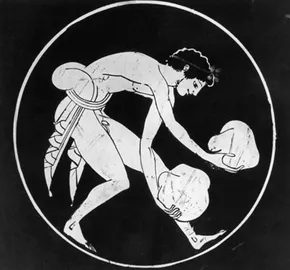
Some athletes were exceptionally agile. Long jumpers used halteres, weights made of stone or lead strapped to their legs. The weights helped them get the extra distance. Before landing, they would tear them off and throw them aside. This ensured a safe return to the ground. Stone and lead weights were also used in discus throw. The modern version is similar. Throwers rotate in a circle and release a heavy disc toward markings in a confined space. Ancient discuses were made of iron, lead and bronze.
Pentathlon
the pentathlon was added to the games. We don’t know much about it. It was added when wrestling became part of the lineup. It was loosely based on Spartan warrior techniques. Modern pentathlon includes archery, fencing, swimming, jumping and running. We can guess that the ancient version resembled a relay race. The athletes were tested with various activities.
Combat Sports
Wrestling and boxing were physically combative. The wrestling was hand-to-hand. Boxing allowed himantes. These were primitive gloves. They were little more than bands that were wrapped around the hands for support. Hard, rough leather could do serious damage. Blows to the face can permanently deform features. Pankration was even more violent. It was a gory showdown. It combined the roughest boxing and wrestling moves. In Greek mythology, it is said that Theseus invented the pankration to defend himself against the Minotaur in the Labyrinth.
Equestrian events
Equestrian events attracted large crowds to the hippodrome. Some competitors were royalty. Chariot races was cutthroat. Royals clamored to achieve victory as preeminent charioteers. It was not uncommon for royalty to cheat. The title went to the owner of the horse, not the athlete. Some royals kicked back in the stands. Commissioned athletes drove the horses to victory.
The myth of the marathon
The marathon has its roots in ancient Greece. It was not part of the ancient Olympics. The 26.2 mile run was not added until the late 19th century. We’ll examine the first modern Olympics to see how it changed.
Olympic athletes

Participation in the ancient Olympics was strictly limited to male citizens. This wasn’t just about gender; it was about status. To be a citizen meant you were a Greek man who voted, served in the military, and engaged in local politics. Slaves were excluded. Most competitors had trades or jobs, no matter how humble. The very first recorded Olympic champion, Koroibos, won the stadion race in 776 B.C.E. as a cook.
The word “athlete” comes from the Greek athleteuō, meaning “to compete for a prize.” The Greeks didn’t care if you were an amateur or a pro. They only cared about the win. Why? Because victory paid off in more than just glory.
The Price of Victory
Rewards varied wildly depending on your city-state. You might get material goods like cauldrons or tripods. Some unusual prizes included women, olive oil, clothing, or even animals. But the real money came from home. City-states often gave cash bonuses. Athens promised Olympic champions a free meal for life. If you won more than three events, your city might commission a statue to honor you. These went up in the temple of Zeus at Olympia. Equestrian champions sometimes even saw their faces stamped on coins.
“Athletes typically were rewarded with cash prizes by their city-states when they returned home, and some even got pensions for their victories.”
Cheating and the Hall of Shame
With so much on the line, people cheated. Bribery was common. If you were caught, you were disqualified. But the punishment didn’t stop there. Brazen cheaters had their likenesses carved into statues. These were placed in a hall of shame along the altis, the sacred pathway leading to the stadium. It was a permanent reminder of failure.
To Nude or Not to Nude
Before the events, athletes oiled their bodies. But did they compete naked? Historians still argue about this. Some ancient texts say athletes wore shorts. Others claim the nudity trend started when a runner named Orsippos had his shorts ripped off during a race. Spartans might have started the tradition in the eighth century B.C.E. After that, it was acceptable to compete with or without clothes. This ambiguity might have been a way to check if women were sneaking in disguised as men.
Death in the Ring
Not all events were friendly. Wrestling and boxing could be lethal. Some athletes died in the ring. When the dust settled, the victor wore red ribbons and was showered with flowers. At the end of the games, a grand ceremony honored all winners. They were announced by their own names, their fathers’ names, and their home cities.
Not everyone won. Not everyone survived. The games were brutal, expensive, and dangerous. But for those who made it back, the prestige was unmatched.
The Herean Games
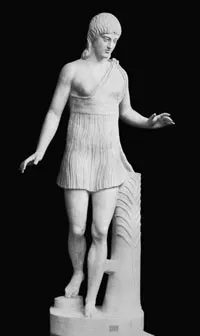

Picture the wife of a gladiator wringing out a blood-soaked rag, weeping for her man’s life. That’s not what happened at the ancient Olympics. Married women were strictly banned from the stands. Historians still debate the exact reasoning behind this exclusion, but the penalty for breaking the rule was absolute. If a married woman was caught in the crowd—even if she disguised herself as a single lady or dressed in male attire—she was executed. The method? Thrown off Mount Typaion, a cliff face towering about 490 feet above the stadium.
There was, however, an exception for the young. Unmarried virgins could mingle with the roaring crowds, their voices adding to the chaos of the event.
The Herean Games: A Female Counterpart
By the second century C.E., the traveler Pausanias documented a different athletic tradition: the Herean Games. These weren’t just a side show; they were a formal counterpart to the Olympics, designed specifically for women. Held every four years during the festival honoring Hera, the queen of the Greek gods and Zeus’ wife, these games existed in the same quadrennial cycle. Whether they started simultaneously with the Olympics or emerged later remains unclear.
The athletic program was limited. There were no wrestling matches or discus throws here. The Herean Games consisted solely of running events. Participation was restricted to unmarried women only. Their attire was distinct: modest tunics that left the right breast and shoulder exposed, a practical choice for movement. Runners competed with their hair loose, flowing freely.
Did they win glory? Yes. But the prizes were far more modest than the olive wreaths awarded to men. An administrative body of 16 women likely organized the races, awarding the winner an amphora —a large, urn-like vessel for storing oil or wine. It was a symbol of honor, but certainly not a fortune.
Breaking the Law: The Story of Kallipateira
Despite the heavy restrictions aimed at integrating women into the Olympic sphere, the games were plagued by inequality and occasional scandal. Bribery and cheating began to tarnish the event’s reputation, setting the stage for its eventual demise. But before the end, one woman managed to slip through the cracks of the strictest rules.
Kallipateira came from a dynasty of champions. Her father, brother, son, and nephew were all Olympic victors. As a widow, she took on the role of trainer for her young son. She was determined to witness his victory firsthand.
When her son was crowned champion, she couldn’t contain herself. In a burst of maternal pride and excitement, she ran from the coaching stands toward the victory area. In her frenzy, her clothing tore away, exposing her body to the crowd. The incident should have been fatal. A married woman had violated the sanctuary of the stadium.
But the judges paused. They recognized her lineage. Because of her close ties to Olympic winners, Kallipateira was pardoned. It was a rare mercy in a system defined by harsh exclusions.
The End of an Era
The ancient games, for all their strides toward female inclusion in specific contexts, remained deeply unequal. The corruption of bribery and the loss of sporting honor weighed heavily on the institution. In 393 C.E., the Christian Emperor Theodosius issued a final blow. He banned both the Olympics and the Herean Games, citing their promotion of polytheism as incompatible with the new Christian empire.
The torch was extinguished. But the flame didn’t die. In the late 19th century, a Frenchman with a vision would work to revive the grand tradition, reshaping it for a modern world.

The Greeks tried it in the 19th century. They held sports competitions hoping to build momentum. It didn’t work. The spark never spread.
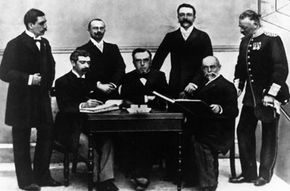
It took a special kind of madness to revive a tradition that had been dead for 1,500 years. Enter Pierre de Coubertin. A French baron with a vision. He didn’t just want sports; he wanted educational reform. Coubertin believed that French society needed a return to the Greek athletic style. He wanted scholars. He wanted citizens. He wanted men who would push their bodies to their limits and sharpen their minds. For him, physical and mental strength were two sides of the same coin.
He brought the idea to the Union des Sports Athlétiques in 1892. The response was mediocre at best. No one was biting. Coubertin didn’t care. He kept pushing. Two years later, on June 16, 1894, the tide turned. An international committee of delegates heard him out. He saw the Olympics not only as a competition, but also as a diplomatic tool. A way to fix a broken world.
The room changed. Belgium, England, Greece, Italy, Russia, Spain, Sweden and the United States said yes. Even once skeptical France finally agreed.
Coubertin wanted the first games in France. The committee disagreed. They felt obligated to the old founders. They insisted on Greece. Coubertin made a compromise. France would host the next game in 1900. But Greece would have the honor of hosting the first modern games in 1896.
This decision set two lasting precedents. The four-year cycle returned. The rotation of host cities began.
Ancient Greeks who excelled in the arena
We often think of ancient Greece when we think of philosophy and medicine. The reality was different. These men moved. They competed. They won.
Several great historical figures were also Olympic champions or participants:
- Aristotle : The philosopher was involved in athletic culture.
- Hippocrates : Father of medicine, competitor.
- Plato : Two-time champion wrestler.
- Socrates : Known for his intelligence, but also present in the arena.
- Pythagoras : The mathematician also won at the Olympics.
They weren’t just thinkers. They were athletes.
Other, less famous but equally dominant people have left their mark:
- Astylos of Kroton : A sprinter who switched allegiances.
- Cyniska of Sparta : A royal woman who owned chariot teams.
- Leonidas of Rhodes : Sprinter with three gold medals.
- Melankomas of Karia : a boxer known for his endurance.
- Milon of Croton : A wrestler whose strength was legendary.
The 1896 Olympics
The stage was set. Athens. 1896. The world watched as the modern era began. It wasn’t just a sporting event. It was a statement. A declaration that the past can fuel the future.
The games began with a mixture of solemnity mixed with excitement. The stadium was full. The atmosphere was electric. Athletes from 14 nations competed. They ran. They jumped. They threw.
It was messy. It was imperfect. But it was alive.
The success of the 1896 Games proved Coubertin right. The model worked. diplomatic

The 1896 Athens Games were a modest affair by modern standards. Nine sports. That was it. Cycling, fencing, gymnastics, shooting, swimming, tennis, track and field, weight lifting, wrestling. Simple. But everyone knew where the spotlight would shine. It was on the marathon.
Michel Bréal, a co-organizer with a romantic streak, came up with the idea. He wanted to pay the ultimate homage to Greece. He proposed a track and field event that retraced the famous route of Phidippides. You know the story. The ancient Greek messenger who ran about 25 miles (40 km) to deliver news of a military victory. He didn’t stop for a drink. He collapsed and died right after finishing his arduous trek. The committee loved it. They embraced the idea instantly. Naturally, the Greeks were favored to win. Home turf advantage is real, even if the legend is tragic.
Fate had other plans for the race day.
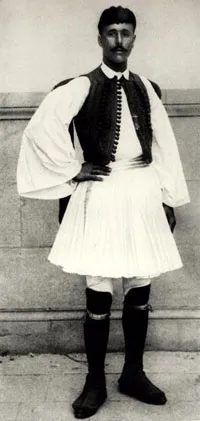
Spiridon Louis, a Greek water carrier, took the gold. He won the marathon. But he didn’t just run. He stopped halfway through at the town of Pikermi. Why? To quaff a glass of wine. Local hospitality, probably. Or maybe just a thirst for life after running for hours. The crowd went wild anyway. Louis crossed the line. The legend held up, even if the hero took a break.
The distance wasn’t fixed yet. It would stretch to the current 26.2 miles later. London hosted the games in 1908 and extended the course for royal viewing. But in 1896, it was about the route. About Phidippides.
Then came the ice.
- Chamonix, France. The first Winter Olympic Games. Cold. Icy. Different from the summer games entirely. These events were added to the four-year rotation. Just four years after the summer games. A counterpoint to the heat. A new season.
The ancient games are gone. The modern ones keep spinning. Summer. Winter. Every four years.
Lots More Information
Related HowStuffWorks Articles
-
How Olympic Timing Works
-
How Olympic Torches Work
-
How Exercise Works
-
Pro Wrestling Mechanics
-
The Seven Wonders of the Ancient World Explained
More Great Links
-
International Olympic Committee
-
Penn Museum’s Real Story of the Olympic Games
Sources
-
“Ancient Olympic Games.” International Olympic Committee. (1 February 2008). http://www.olympic.org/uk/games/ancient/index_uk.asp
-
“Ancient Olympic Games — More on the Athletes.” International Olympic Committee. (1 February 2008). http://www.olympic.org/uk/games/ancient/athletes_uk.asp
-
“Ancient Olympic Games — More on the History of the Games.” International Olympic Committee. (1 February 2008). http://www.olympic.org/uk/games/ancient/history_uk.asp
-
“Ancient Olympic Games — More on the Gods.” International Olympic Committee. (1 February 2008). http://www.olympic.org/uk/games/ancient/gods_uk.asp
-
“Ancient Olympic Games — More on Sports Events.” International Olympic Committee. (1 February 2008). http://www.olympic.org/uk/games/ancient/events_uk.asp
-
“Anecdotes About the Ancient Olympic Games.” Dartmouth University. 2004 (13 February 2008). http://minbar.cs.dartmouth.edu/greecom/olympics/anecdote.php
-
“Are Today’s Olympians Too Commercial? Depends…” University of Pennsylvania Museum of Archaeology and Anthropology. 2007. (1 February 2008). http://www.museum.upenn.edu/new/olympics/olympiccommercialism.shtml
-
“The Athletes: Amateurs or Pros?” University of Pennsylvania Museum of Archaeology and Anthropology. 2007. (1 February 2008). http://www.museum.upenn.edu/new/olympics/olympiccathletes.shtml
-
Benagh, Jim. “Olympic Games.” Scholastic.com. (7 February 2008). http://content.scholastic.com/browse/article.jsp?id=506
-
“The Games.” University of Pennsylvania Museum of Archaeology and Anthropology. 2007. (1 February 2008). http://www.museum.upenn.edu/new/olympics/olympicorigins.shtml
-
“History.” International Olympic Committee. (1 February 2008). http://www.olympic.org/uk/organisation/missions/truce/truce_uk.asp
-
Lovett, Charlie. “The Games of the I Olympiad: Athens, 1896.” Excerpted from Olympic Marathon. Greenwood Publishing Group, Inc., Westport, Connecticut. 1997. http://www.marathonguide.com/history/olympicmarathons/chapter1.cfm
-
“The Politics of the Olympic Games.” University of Pennsylvania Museum of Archaeology and Anthropology. 2007. (1 February 2008). http://www.museum.upenn.edu/new/olympics/olympicpolitics.shtml
-
Segrave, Jeffrey O., Ph.D. “Hitler’s Ambitious Plans for the 1936 Olympics.” 23 August 2004. http://hnn.us/articles/6875.html
-
“Unearthing the First Olympics.” NPR. 19 July 2004 (7 February 2008). http://www.npr.org/programs/re/archivesdate/2004/jul/nemea
-
“The Women: Were the Ancient Olympics Just for Men?” University of Pennsylvania Museum of Archaeology and Anthropology. 2007. (1 February 2008). http://www.museum.upenn.edu/new/olympics/olympicsexism.shtml

