


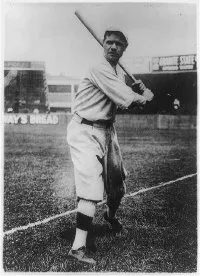
Babe Ruth started 1915 as a pitcher trying to survive the Boston Red Sox rotation. He didn’t look like a future legend then. He was twenty-one years old, fresh out of St. Mary’s, and recovering from a honeymoon that consisted of living above a saloon bar with his new wife Helen.
The call came in April. Rookie Carl Mays tore an ankle. Ruth got the nod.
His debut wasn’t pretty. He got hammered. His second start was a 13-inning grinder where Boston lost 4-3 to the Yankees. But something happened in that loss that would echo through history. Ruth hit a home run into the upper right-field stands at the Polo Grounds.
The 5,000 onlookers were amazed by both the majesty of the shot and the ease with which it was struck.
That was Babe Ruth’s first home run. It wasn’t just a hit. It was a statement.
The Pitching Prodigy
Despite the early struggles, Manager Bill Carrigan saw potential. Ruth was aggressive. He had “something extra.” Boston was a mess in April, starting 1-4, but Ruth turned it around.
He went 17-4 for the rest of the season.
It wasn’t just raw talent. Ruth studied the game. He watched veteran hurlers. He talked to them. He improved his control. His fastball was still his best weapon, but he developed a nasty curve. He was a keen student off the field, even if he was a rambunctious mess on it.
Boston roared back. They won the American League pennant. Ruth wasn’t just a pitcher. He was becoming the focal point of a franchise.
The Off-Field Chaos
If you think Ruth was just about baseball, you’re missing half the story. Between games, he was a force of nature.
He had a voracious appetite for life. Some say he was making up for lost time. Others argue he was compensating for a childhood of virtual poverty. Whatever the reason, it wasn’t a phase. The frequency and flamboyancy of his antics set him apart.
He drove fast. He wore garish, flashy suits. Tales spread of him eating a dozen hot dogs and chugging bottles of soda during games, even on the bench. It was as if he knew his good fortune might vanish, so he consumed everything in sight. He was attempting to make up for two decades of neglect in real-time.
Teammates tolerated it. Most of them weren’t choirboys themselves. They accepted his zest and his vulgar clubhouse banter.
Carrigan tried to rein him in. He banked Ruth’s three-year guaranteed salary and gave it back in tiny daily installments. It rarely worked. Ruth respected Carrigan like no other manager. He even respected Brother Matthias. But good times beat loyalty every time.
The Dead-Ball Era
While Ruth was building his legend off the field, Boston was fighting for the pennant. The Detroit Tigers were right there on their heels.
July brought a 15-4 win streak. But Detroit clawed back. The division came down to a late-September series at Fenway Park.
Boston won three of four games. Ruth claimed a 3-2 victory in the final, decisive game. The Red Sox wrapped up the pennant shortly after.
But the real story wasn’t the standings. It was the power.
Fans were starting to notice. Ruth was evolving into a magnetic force. His ability to hit the ball long distances fit his character perfectly. It was a act the league hadn’t seen in decades.
Why It Mattered
Baseball was in its dead-ball era. Batting averages hovered around .250. Offense was about steals. Hit-and-runs. Bunts.
The balls were scuffed. Dirtied. Greased up by pitchers. The spitball wouldn’t be outlawed until 1921. Balls were left in games until they were threadbare or water-logged.
Ty Cobb was the king. A .367 lifetime hitter. He stole up to 96 bases in a season. He never hit more than nine home runs before 1921. His maniacal mastery of base-by-base “inside” baseball included spike-first slides and $20,000 contracts. Nobody expected the game to change.
Then came Ruth.
Newspapers didn’t record home run stats in 1915. But if they had, Ruth would have topped the team list. He hit four. The rest of the Red Sox club totaled ten.
His stroke was different. Flowing. Upward. A rare sight in a league of level swingers trying to make contact.
When he connected, the ball went far. He hit only the second home run ever to reach the distant right-field bleachers at Fenway. His final shot of the year in St. Louis left Sportsman’s Park, bounced across a street, and reportedly broke a plate-glass window of an auto dealership 430 feet from home plate.
It wasn’t just a hit. It was the end of an era.
The Physical Dominance of a Young Ruth
Joe Dugan, his teammate, put it bluntly: Babe swung from Port Arthur, Texas, on every pitch. That wasn’t just aggression. It was physics. The average major leaguer of that era stood about 5’9” and weighed less than 170 pounds. Ruth? He was 6’2” and 190 pounds. A dramatic, imposing presence on the field.
His shoulders were huge. His arms massive. A firm chest. And then those tiny, splintery legs. He looked almost cartoonish while running. But he could run. And he ran well.
That massive belly and slow gait? The modern image of the chubby slugger? That came much later. In 1915, he was lean. Dangerous.
Ruth’s 1915 Stats
So how did he fare during the 1915 regular season? The numbers don’t lie. They show a pitcher who was already lethal and a hitter who was beginning to show flashes of his future power.
| Statistic | Value |
|---|---|
| Games | 64 |
| Pitching Record | 23-12 |
| ERA | 2.44 |
| Shutouts | 6 |
| Strikeouts | 172 |
| Batting Average | .315 |
| Home Runs | 4 |
| RBIs | 51 |
He wasn’t just a pitcher. He was hitting .315 with four home runs and 51 RBIs. A rare feat for a two-way player in that era.
Why It Matters
This wasn’t just a good season. It was the foundation. The physical disparity he had over his peers gave him an edge. The power in his swing came from that frame. The speed came from a body that wasn’t yet weighed down by decades of excess.
He was building something. Or breaking something. Hard to tell which at the time.
The Legacy of the Frame
We see the later Ruth. The legend. The icon. But the 1915 Ruth was different. He was athletic. Imposing. Unpredictable.
Teams adjusted. Scouts took notes. Fans leaned in.
The game changed because he changed it. Not with words. With swings. With runs.
More on Baseball
For more information about baseball and baseball players:
-
Baseball
-
Minor League Baseball
-
Baseball Hall of Fame


