Your immune system has a bad habit. It looks at pollen, pet dander, or dust mites and screams “threat!” even though these substances are harmless. The result is an inflammatory response designed to eject the intruder, but it usually just leaves you sneezing, itching, and congested.
While Western medicine often treats the symptoms, Traditional Chinese Medicine (TCM) looks at the root cause. Specifically, for pollen allergies, or hay fever, there is a structured approach involving herbs, diet, and acupuncture.
The Root: Wind and Qi Deficiency
In TCM theory, every allergy involves wind. It is the primary pathogen, but it rarely works alone. It usually combines with dampness, cold, or heat. For seasonal hay fever, the diagnosis is typically wind and dampness.
This combination explains why symptoms hit so suddenly. You go from fine to sneezing and itchy eyes in seconds. A heavy head and copious mucus are classic signs.
But why does this happen to you and not someone else? TCM points to an underlying weakness. Most people with chronic allergies have a deficiency in lung and spleen qi.
Lung qi governs the respiratory tract, including the nose. Spleen qi controls fluid transport. When spleen qi is weak, digestion suffers. Mucus overproduces and collects in the lungs. The body is essentially flooded with the very substance it is trying to reject.
“An underlying weakness, often a deficiency of lung and spleen qi, makes persons with allergies susceptible to allergic reactions.”
Herbal Strategy: Dispel Wind, Dry Dampness
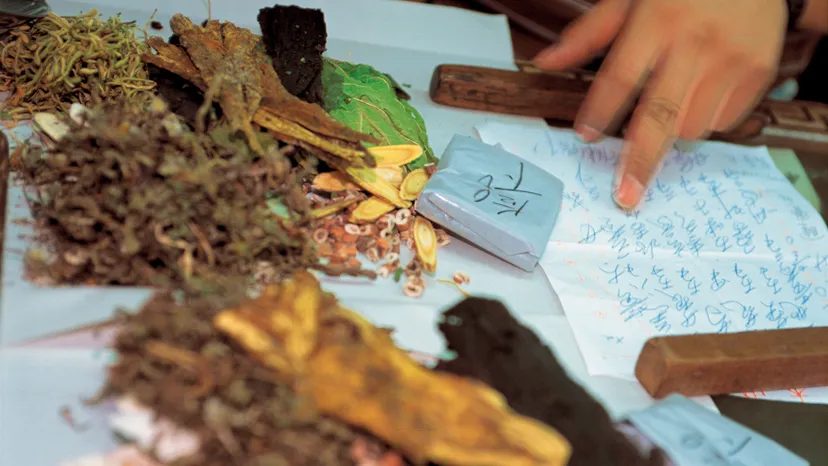
Treatment focuses on two goals. First, repel the wind. Herbs like Japanese catnip (Schizonepeta tenuifolia ) and Siler divaricata (fang feng ) are dispersing in nature. They push the wind out.
Second, drain the dampness. To clear nasal passages, practitioners use Angelica dahurica (bai zhi ), magnolia flower buds (xin yi hua ), and Xanthium sibiricum (cang er zi ). Together, these form Xanthium Decoction. A common patent medicine containing these ingredients is Bi Yan Pian.
However, pushing the wind away isn’t enough if the root weakness remains. You must tonify the lung and spleen. Herbs like Codonopsis (dang shen ), Atractylodes (bai zhu ), Poria (fu ling ), and prepared licorice (zhi gan cao ) strengthen the organs.
Six Gentlemen Teapills is a standard formula for this deficiency. It includes Pinellia (ban xia ) and aged citrus peel (chen pi ) to further dry dampness and clear mucus. A practitioner might customize this base by adding Chrysanthemum flowers to soothe itchy eyes or jujube dates to boost the overall antiallergic effect.
Dietary Adjustments for Mucus Control
Diet is not just support; it is active treatment. Certain foods increase mucus buildup, fueling the allergic reaction.
Avoid these during allergy season:
* Sweets
* Dairy products
* Cold foods (like ice cream and yogurt)
When mucus accumulates, allergens trigger a much stronger response. Instead, focus on easy-to-digest foods. Soups, warm salads, vegetables, and boiled grains support efficient digestion. Less mucus means less fuel for the fire.
Acupuncture and NAET
Acupuncture offers immediate relief for many. Points around the nose, such as Yintang, Bitong, and Large Intestine 20, can reduce congestion and sneezing almost as soon as the needles are inserted.
Results vary. Some patients get temporary relief. Others find complete remission.
A more sophisticated approach is Nambudripad’s Allergy Elimination Technique (NAET), developed by Dr. Devi Nambudripad. This method involves identifying the specific allergen through testing. Then, while the patient is exposed to the allergen, acupressure and acupuncture are applied. The goal is to reprogram the body to accept the substance without reacting. The effects are intended to be long-term, virtually eliminating the allergy.
The Practitioners Behind the Methods
This approach is grounded in clinical practice. Bill Schoenbart has practiced TCM since 1991, holding a Masters degree. He teaches medical theory and herbalism in California while maintaining a private practice.
Ellen Shefi brings a multidisciplinary view as a licensed acupuncturist, massage technician, and registered dietician. She is a member of several professional associations, including the American Association of Acupuncture and Oriental Medicine.
Traditional Chinese Medicine for allergies is not a single pill. It is a system. It addresses the wind, dries the damp, strengthens the spleen, and adjusts the diet. The result might be less sneezing. Or it might be a complete shift in how your body interacts with the world.