


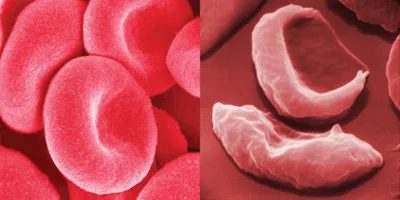
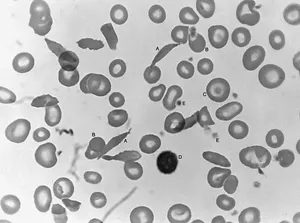
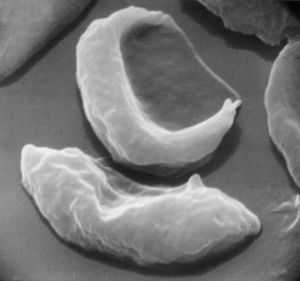
Sickle cell anemia is not a random event. It is an inherited disease that fundamentally changes the function of red blood cells. Instead of flowing smoothly through tiny capillaries, these cells harden into a rigid, crescent-shaped mass. This structural change is the primary cause of the damage that defines the disease.
The consequences are far-reaching. Patients often experience the classic signs of chronic anemia, such as constant fatigue, pale skin, and shortness of breath. The immune system also weakens, making people more susceptible to infections. Other symptoms include jaundice, various eye problems and delayed growth in children. However, the most acute danger comes in the form of episodic crises. These are sudden, severe episodes of pain that can affect the abdomen, bones or muscles without warning.
Although the disease is most common among people of African descent, it does not discriminate based on geographic location alone. People in the Middle East, the Mediterranean region, and parts of India are also affected. Despite the severity of symptoms, overall mortality in carriers of sickle cell traits is still comparable to the general population. The trait itself is not a death sentence. It is a genetic variation. The disease, however, is a different story.
The genetic mechanism behind the shape
To understand why this happens, you have to look at the molecular level. Red blood cells are full of hemoglobin, the protein responsible for transporting oxygen. In healthy cells, hemoglobin is flexible. This allows the cell to maintain its round, disc-like shape.
Sickle cell anemia is associated with a mutation in the gene that codes for hemoglobin. This single change changes the structure of the hemoglobin molecule. When these abnormal hemoglobin molecules release oxygen, they tend to stick together. They form long, stiff strands inside red blood cells.
These strands press on the cell membrane. They turn the flexible disc into a rigid sickle. The problem is not just the form itself. It is what the shape does next.
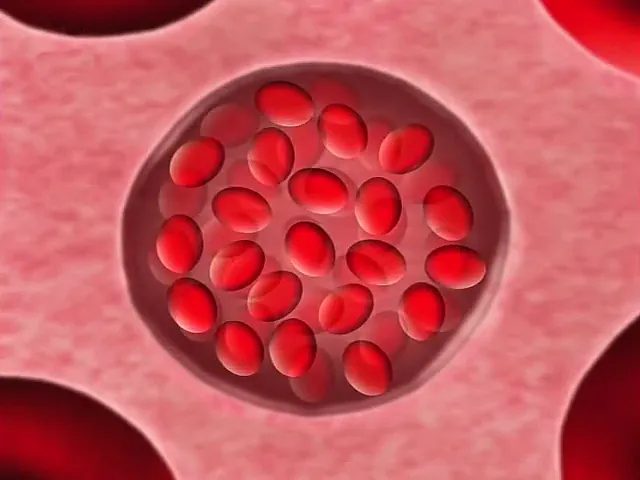
These stiff cells get stuck in small blood vessels. They block blood circulation. This blockage cuts off the supply of oxygen to the tissues. The result is pain, tissue damage and organ stress. The cells also break down more easily than normal red blood cells. This leads to a lack of red blood cells in the body. Hence anemia.
The body works overtime to replace these lost cells. This rapid turnover releases bilirubin. High levels of bilirubin cause jaundice and yellowing of the skin and eyes. The liver and spleen work harder to filter out the damaged cells. Over time, this stress can lead to organ dysfunction.
It’s a chain reaction. A single genetic error leads to a change in protein structure. This change leads to stiffening of the cells. Rigid cells cause blockages. A blockage causes pain and damage. The cycle repeats itself.

How sickle shape works
Sickle cell anemia is caused by a genetic abnormality in hemoglobin, the protein that carries oxygen in red blood cells. More specifically, it contains a variant called hemoglobin S (HbS). Unlike normal hemoglobin (HbA), HbS becomes unstable when the oxygen concentration decreases.
What happens next?
When red blood cells deliver oxygen to the tissues, their oxygen concentration drops dramatically. In hypoxic conditions, HbS behaves differently than HbA. It accumulates in cells and forms filaments that twist into spiral rods. The rods are connected in parallel bundles. result? Cells twist, stretch and stiffen. It has a distinctive sickle shape.
This process is not always permanent. When oxygen levels rise again, cells can return to normal. But repeating the cycle of sickling and unsickling will cause great damage. Eventually the distortion becomes irreversible. Cells lose their flexibility.
Why Blockages Occur
正常的红细胞是软的。 它们轻松地挤过微小的毛细血管。 镰状细胞则不然。 他们很僵化。
当这些僵硬的细胞到达最小的血管时,它们就会被卡住。 这会阻塞微循环。 血流明显停止或减慢。 下游组织无法获得所需的氧气。 随着时间的推移,这种障碍会造成损害。 它会导致各种组织的破坏,引发与该疾病相关的痛苦危机和器官并发症。

Sickle cell anemia is the result of two copies of the mutant hemoglobin S (HbS) gene. In genetics, this is called the homozygous state. But what if you only have one bad gene?
This is the origin of the heterozygous state. The sickle cell gene is inherited from one parent and the normal hemoglobin A (HbA) gene from the other parent. You are a carrier. You have Sickle cell trait.
The biology here is surprisingly forgiving. Carrier red blood cells contain both HbA and HbS. Because the hemoglobin is normal, the cells are unlikely to become sickled. They require more deoxygenation to change shape than red blood cells in people with complete sickle cell anemia.
Most people who have this trait don’t know they have it. They have no symptoms. There is no pain. There is no crisis. It is not a disease in the traditional sense.
Yet.
However, there are exceptions. The trait can become problematic under extreme stress. Vigorous exertion at high altitudes. sickling can occur when the oxygen level drops and the body is stressed. But for most people, life goes on as normal.
Why the Trait Persists
镰状细胞特征不仅仅是随机的遗传错误。 这是一种进化的权衡。 该基因在某些人群中持续存在,因为它可以预防疟疾。
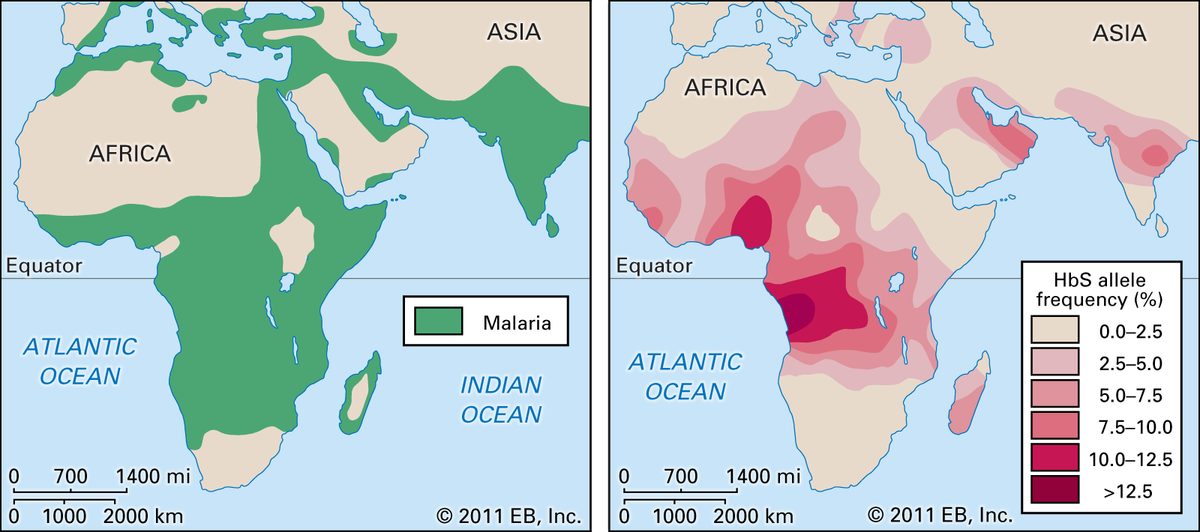
这就是为什么这种特征在疟疾流行或曾经流行的地区更为常见。 撒哈拉以南非洲、地中海部分地区、印度和中东。 如果您携带该基因的一份副本,您的红细胞就不太适合疟疾寄生虫。 您死于严重疟疾的可能性较小。
这是杂合子优势的典型例子。 两个坏基因意味着镰状细胞性贫血。 一种坏基因意味着对疟疾的抵抗力。 自然在刀刃上保持平衡。
镰状化什么时候发生?
对于具有这种特质的人来说,镰刀是罕见的。 它需要完美的条件风暴。
- 高海拔: 血液中的氧分压较低。
- 剧烈运动: 肌肉迅速消耗氧气,造成局部缺氧。
- 脱水: 较稠的血液流动较慢,增加阻塞的机会。
- 极冷或极热: 两者都会给心血管系统带来压力。
这不是理论上的风险。 有记录显示,年轻、健康的携带者在高海拔地区进行剧烈的体能训练后倒下或死亡。 军方已经看到了这一点。 大学运动员已经看到了这一点。
关键是回避。 当氧气稀缺时,不要将你的身体推向崩溃点。 保持水分。 了解你的极限。 如果你有这个特质,你就不需要生活在恐惧之中。 但你确实需要意识到。
Diagnosis and testing
How do I know if I have sickle cell trait? You can’t feel it. Most of the time there are no symptoms.
The only way to know is with a blood test. Hemoglobin electrophoresis is a standard diagnostic tool. Differentiates different types of hemoglobin in the blood. If this feature is present, the test will show both HbA and HbS.
Newborn screening programs caught this problem early. in the United States and many other countries

对于非洲人后裔来说,镰状细胞特征非常常见。 全球大约十二分之一的人具有这种特征。 镰状细胞性贫血本身较为罕见。 大约四百分之一的人患有这种疾病。 如果父母双方都具有这种特征,那么几率就会发生巨大变化。 他们的孩子有四分之一的机会患有贫血。 基因测试改变了现状。 羊膜穿刺术 提供了一种早期发现病情的方法。 该程序分析羊水。 它发生在怀孕的第一阶段。
Testing for genetic diseases with amniocentesis
Amniocentesis is a prenatal test. The doctor collects a small amount of amniotic fluid. This fluid surrounds the developing fetus. The sample contained fetal cells. The DNA of these cells can be analyzed. Sickle cell anemia is a genetic disease. Affects red blood cell hemoglobin. This test looks for specific genetic mutations. These mutations cause disease.
The operation is usually performed between 15 and 20 weeks of pregnancy. There are some risks involved. The chance of miscarriage is very low. The risk is about 1/200 to 1/400 people. Many doctors recommend its use in high-risk pregnancies. Testing is usually recommended for couples whose genetic background is known. Early detection allows better planning. Parents can prepare for medical needs. You can contact an expert in advance.
谁应该考虑基因筛查?
镰状细胞性贫血主要影响非洲、中东、地中海和南亚血统的人。 该特性提供了一些针对疟疾的保护作用。 这种进化优势使该基因保留在种群中。 如果父母双方都有这种特征,那么风险就很高。 每次怀孕,孩子有 25% 的机会出现贫血。 孩子有这个特质的几率是50%。 孩子有 25% 的机会不受影响。
遗传咨询可以帮助家庭了解这些可能性。 它解释了性状和疾病之间的区别。 该特征通常是无害的。 具有镰状细胞特征的人过着正常的生活。 他们可能在极度压力下出现问题。 疾病不同。 它会导致疼痛危机和器官损伤。 早期诊断可以改善结果。 存在新的治疗方法。 它们减少并发症。
The role of early prenatal testing
Before amniocentesis, the ability for early detection was limited. Parents have to wait until the child is born. Alternatively, you can take your child’s blood test later. Amniocentesis can give you answers months in advance. This gives families time to make informed choices. Some want to prepare medically. Others may consider leaving. This decision is personal. It depends on your values and resources.
Non-invasive prenatal testing (NIPT) is another option. Analyze the fetal DNA in the mother’s blood. It is less risky than amniocentesis. However, amniocentesis is more accurate for certain genetic disorders. It is considered the gold standard. You will get clear results. NIPT can give false positive or false negative results. Amniocentesis can confirm the diagnosis.
引导决策过程
与遗传咨询师交谈是关键。 他们解释了好处和风险。 他们讨论了积极结果的影响。 并非所有家庭都想要早期知识。 有些人宁愿等待。 这是他们的权利。 羊膜穿刺术是一种选择,而不是强制要求。 它赋予

HbS genes are not randomly distributed. It hugs an equatorial belt of Africa and is scattered to other parts of the continent and the Americas. Why does it continue? Natural selection offers a cruel but clear answer. Heterozygous carriers, or carriers with only one copy of the trait, may survive malaria better than carriers without the trait.
When the malaria parasite invades the red blood cells of a person with sickle cell trait, the red blood cells stick to the blood vessel walls. They remove oxygen. They sickle. They are destroyed. The parasites die with them. It is a trade-off. A genetic disadvantage in malaria-free areas becomes a life-saving advantage in areas where malaria is endemic.
Shifting from Management to Cure
几十年来,治疗的重点是控制损害。 减轻症状是目标。
患有镰状细胞性贫血的婴儿和幼儿每天接受青霉素治疗。 不是为了治愈,而是为了预防他们受损的免疫系统无法单独应对的严重感染。 在严重的情况下,定期输血成为标准。 目标是预防器官损伤和中风,并减轻红细胞损失的最坏影响。
骨髓移植为最严重的病例带来了一线希望。 它有效,但风险很高。 这不是常规修复。
Hydroxyurea: Turning Back the Biological Clock
羟基脲改变了景观。 它不仅仅掩盖症状; 它在分子水平上针对根本原因。
该药物激活触发胎儿血红蛋白产生的基因。 这是婴儿在出生前后大量产生的血红蛋白类型。 它没有镰刀。 通过重新唤醒成人的胎儿途径,羟基脲可将胎儿血红蛋白水平从约 1% 提高到约 20%。
那百分之二十就够了。 它significantly减少了该疾病的循环危象。 这是一种生物黑客。 这是一种从婴儿时期就借用保护的方法。
The Gene-Edited Future
There have been real changes recently. In 2023, the US Food and Drug Administration approved two breakthrough treatments. They are more than just treatments. They are potential cures.
Casgevy uses CRISPR-Cas9 gene editing. The defective gene is removed from the patient’s stem cells. The process is intensive. The patient underwent several blood transfusions to separate the stem cells. Cells are modified in the laboratory. Patients then receive chemotherapy, which destroys their bone marrow. This ensures that no sickle cells remain. The engineered stem cells are then re-injected. The body produces healthy blood from scratch.
Lyfgenia follows a different route. This is a type of gene therapy in which the stem cells are modified to produce a hemoglobin variant that works in the same way as normal adult hemoglobin (HbA). These modified cells are re-infused into the patient. The goal is the same. crowd out the sickling cells with healthy ones.
These treatments are complex. It’s expensive. These involve significant risks. But they have led to a fundamental change in the way we think about sickle cell disease. It is no longer just a chronic disease that needs to be treated. This is a genetic defect and can be corrected in some cases.
The history of the HbS gene is a story of survival. The future of treatment is a story about control. We have moved from understanding why it exists to understanding how to eliminate its effects. The work is not finished yet. But the trend has changed.


