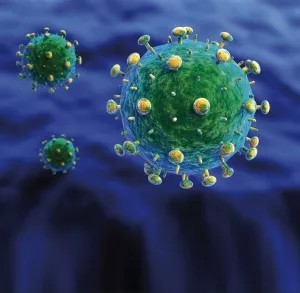
The 21st century has seen its share of global health crises, but none have left the same scar as AIDS. Known officially as Acquired Immune Deficiency Syndrome, or AIDS, this disease stands as one of the most devastating epidemics in modern history. To date, nearly 30 million people have died from complications related to the illness. It remains a leading cause of death worldwide.
The world first became aware of the threat in the early 1980s. The signal didn’t come from a sudden storm or a new flu strain. It came from hospitals in the United States reporting a cluster of strange cases. Most of the patients were homosexual men. They were sick with conditions that healthy immune systems typically handle without issue. One was Kaposi’s sarcoma, a rare and malignant skin tumor. The other was a form of pneumonia caused by Pneumocystis, an infection rarely seen in people with robust health.
Doctors looked for a common thread. Blood tests revealed the answer. The patients’ T-helper cells—the immune system’s commanders—had been severely depleted. Without these cells, the body cannot fight off opportunistic infections or cancer. Scientists realized they were facing a new, lethal threat. They called it GRID, short for Gay-Related Immune Deficiency. The name assumed the disease only affected gay men.
That assumption proved wrong almost immediately.
Cases began appearing in heterosexual populations. Intravenous drug users sharing needles fell ill. Sex workers saw rising infection rates. Hemophiliacs who required regular blood transfactions contracted the virus. Transplant recipients were not safe. The name GRID was discarded. The term AIDS replaced it, acknowledging that the disease had no single demographic boundary.
The Virus Spreads with Alarming Speed
The expansion of HIV was not gradual. It was exponential.
In 1981, the United States saw roughly one new case per week. By 1985, that number had skyrocketed to 200 new cases every single week. The disease was no longer a localized anomaly. It was a global explosion.
The race to identify the culprit was intense. Scientists in the US and France worked independently but reached the same conclusion between 1982 and 1984. They had found the pathogen. They named it HIV, the Human Immunodeficiency Virus.
Understanding the transmission routes was just as urgent as finding the virus itself. The evidence was clear. HIV spreads through specific body fluids: blood, semen, vaginal secretions, and breast milk.
The virus used three main highways to spread across continents:
– Unprotected sexual intercourse.
– Contaminated blood transfusions.
– Shared needles among drug users.
There is no ambiguity here. The virus travels through these fluids. It does not spread through casual contact. But within those channels, it moved fast.
The human cost of this rapid spread was measured in famous lives as well as ordinary ones. Rock Hudson, the Hollywood icon, died in 1985. Freddie Mercury, the lead singer of Queen, succumbed to the disease in 1991. Their deaths brought the epidemic into living rooms and newsstands worldwide.
The early years were defined by confusion and fear. Medical guidelines lagged behind the virus’s replication. Condoms were not yet the universal standard of protection they became later. Blood screening processes were being developed in real-time.
The virus had established a foothold. It had changed the way doctors viewed immunity. And it had changed the world.
The WHO’s 1987 Global Initiative
The World Health Organization launched its global AIDS program in 1987. That move changed how the world looked at the disease. It stopped being just a medical mystery and became a public health crisis requiring unified action.
Fighting Stigma and Spread
In many countries, local AIDS organizations sprang up overnight. Their mission was clear. They wanted to educate the public about immunodeficiency. More importantly, they targeted transmission routes. Knowledge was their primary weapon.
But there was another enemy. Stigma. These groups fought hard against the discrimination faced by those infected. They argued that fear of judgment kept people from seeking help or disclosing their status. Without transparency, the virus spread unchecked.
Why Early Education mattered
The focus on transmission possibilities was not accidental. Understanding how HIV spreads allows for prevention. It shifts the narrative from moral failure to biological reality. This shift was vital for community health strategies.
Organizations worked to separate the patient from the panic. They provided facts. They offered support. They created safe spaces for discussion. This approach helped reduce the isolation that often accompanied an HIV diagnosis.
The lasting impact
The groundwork laid in 1987 set the stage for decades of advocacy. It established a model for health crises. Awareness campaigns became standard. Anti-discrimination efforts became a core component of medical care. The legacy of those early organizations remains visible in how we approach health today.
We still face challenges. New strains emerge. Social stigmas evolve. But the framework built on education and empathy holds firm. It reminds us that health is not just about biology. It is about society.