


Jules Knight stood on the balcony and cried in the dark. He wasn’t awake. He didn’t fall asleep either. He is trapped in the jagged line between the two, a nameless fear that feels like the end of the world.
Inside the apartment, his roommate, Stephen Bowman, heard the commotion inside the apartment. It wasn’t just crying. It was the raw, uncontrollable sobbing of a man in deep pain. Bowman knew what to do. He had known Knight since they were boys in boarding school, back when Knight’s nocturnal terrors would wake up the whole dorm.
Back then, the housemother took the boy outside and tried to calm him down with hot chocolate. It never worked. The crying continued until the storm passed.
Now that he’s an adult, Knight had no more control than he was as a child as a founding member of British boy band Blake. Bowman took him back inside and through a nightmare he wouldn’t remember in the morning.
Except for the terror.
What Are Sleep Terrors?
Knight is experiencing sleep terrors, a type of parasomnia that affects people during deep non-REM sleep. Unlike nightmares, which occur during REM sleep and often remain vivid after awakening, sleep terrors occur during the deepest stages of sleep.
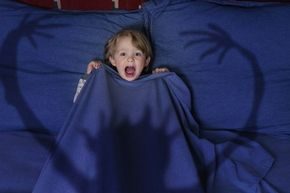
The sufferer appears fully awake— eyes open, screaming and sweating, but is actually unconscious. They don’t respond to comfort or logic. After the episode ends, they fall asleep again and wake up with no memory of the event.
This distinction is important. This explains why Knight felt the end of the world at the time, but didn’t remember it the next day. An abnormality occurs in the brain that triggers a fight-or-flight response that the conscious mind cannot process online.
Why It Persists
For some, childhood sleep terrors fade. For others, like Knight, they persist into adulthood. Triggers vary. Stress is a big factor. Lack of sleep is also one reason.
Knight’s experience underscores the confusing nature of the disease. The body is in crisis mode, but the mind is offline. This disconnection creates a deep sense of helplessness, not only for the victim, but also for those close to them who have witnessed the incident.
Bowman’s presence was key. He didn’t try to wake the knight, but that would have been impossible and would have made the plot even worse. He simply ensures safety. He guides him away from the balcony and out of harm’s way until the physiological storm passed.
The Aftermath
The next morning, Knight will likely feel fine. You might notice that your roommate looks tired or your apartment is a mess, but you’ll be less mentally stressed for the night. The memories are erased, except for the feeling of fear that sometimes remains in the body.
This is the cruel irony of sleep terrorism. The victims were traumatized at the time, but when they woke up, they were gone from the story. They have to believe what others tell them: that they are safe, that they are not really awake, that the fear is real but the danger is not.
For people with parasomnias, the night is not a place of rest. This is a separate and often violent reality. Understanding this helps explain why the usual advice for insomnia and nightmares doesn’t work. you can


Do not confuse night terrors with other sleep disorders. Parasomnia is a general term for strange events that disrupt rest, and the list is long. You have sleep apnea, which stops your breathing. I have sleep paralysis and can’t move my body even when I’m awake. And then there are the recurring nightmares.
Night terrors are different. they are violent.
Suffering from sleep terrors can seem like a panic attack in slow motion. They scream. They thrash. Their eyes widen, their pupils dilate, and their hearts pound against their ribs. It looks horrible. But here’s the problem. the person having the episode are completely unaware of their surroundings.
Trying to comfort them usually backfires. They don’t recognize you. They don’t calm down. They may mumble or scream incoherently. This state of confusion can last up to 20 minutes. And when it’s over? A sleeping person has no memory of the event. In the morning, the fear may remain, but the “horrific visions” itself has faded from memory.
Who really gets night terrors?
It’s mostly kids. If you’re an adult like Jules Knight, it’s rare to experience night terrors on a regular basis.
Statistics on how many children experience this condition are all over the place. One estimate shows that about 6.5% of children between the ages of 4 and 12 have this condition. Some studies suggest that this proportion may be as high as 40% in children aged 2.5 to 6 years. Others say it starts as early as age 3.
Compare that to the adult population. Only about 2.2% of adults deal with this problem.
Gender doesn’t matter. Boys and girls are hit equally. Men and women are all in the same boat. However, there are age limit. Very few people over the age of 65 experience night terrors. Aging seems to fix the glitch.
The Biology of the Freakout
Why is this happening? There is no complete answer yet. However, we do know that it is related to central nervous system (CNS) overstimulation.
Think about it. Children’s central nervous system is still maturing. They are naturally energetic and grow quickly. This overstimulation may explain why they are the main victims. As the nervous system stabilizes with age, the terrors fade.
We also know when it happens. This is not random.
Night terrors occur during the deep sleep phase. In particular, this happens when the brain moves from stage 3 to stage 4 of NREM sleep. This is when the brain’s delta waves begin to slow down. Heart rate drops. Blood pressure drops. You are as deep in sleep as you can get.
This change can happen from one to three hours of closing your eyes. This is a specific window of vulnerability during your sleep cycle.
Decoding sleep stages
So what exactly are stages 1 through 4? Why does the jump between three and four cause a wild-eyed freakout?
To understand the terror, we must first understand the architecture of sleep. It’s not a straight line. This is a cycle. Complex, rolling wave of brain activity.
The Architecture of Deep Sleep
Most people know about REM sleep. It’s a dream stage. Here we scan the back of your eyelids while your eyes are closed. You can’t make your dreams come true because your muscles are paralyzed.
However, night terrors occur during non-REM sleep. The “non-rapid eye movement” part is important. This is a restorative sleep. It’s one that helps your body repair tissue and consolidates memory.
The first stage is the drift. You’re falling asleep. the muscles relax
Sleep is more than just a pause button in life. This is a state of active repair and renewal. When you feel a heavy eyelid drag, adenosine builds up in your brain. Serotonin and other neurotransmitters send signals that the conscious mind needs to shut down. You don’t just drift off. You go through a certain series of steps.
Structure of sleep
The first step is the border area. You are half inside and half outside. A loud noise can wake you to loud noises. If you are relaxed, you go to the second stage. This is the main stage of sleep. You spent about half the night here. Eye movements stop. Brain waves are slow.
Then comes stage 3 and stage 4. This is deep sleep. Delta waves or very slow brain rhythms predominate. You are far under. You are hard to wake up. After this, REM (Rapid Eye Movement) takes over. Your eyes twitch. Breathing becomes shallow. Muscle paralysis. This is where dreams happen. REM sleep accounts for about a quarter of sleep.
This cycle repeats itself. Each cycle lasts about 90 minutes. This is why you may experience several sleep disturbances in one night. Each phase serves a different physiological purpose.
Deep sleep and rapid eye movement
Deep sleep (including stages 3 and 4) is essential for recovery. Tissues can repair themselves. The body releases important hormones, such as growth hormone, which are essential for the child’s development.
REM sleep, on the other hand, seems to energize the brain. Improve your performance while awake. Both states are cooperating. One is to heal the body. Another thing is to sharpen your mind.
Night terrors and nightmares
Night terrors are often confused with nightmares. they are not the same. The difference is the timing.
Night terrors occur during the transition between stages 3 and 4. This is the middle of the night and deep into the delta wave phase. Hormones and regenerative activity are at their peak. In contrast, nightmares occur during REM sleep.
This is when the memory lapse is explained. We hardly remember night terrors. during deep sleep transitions, the brain is not ready to encode long-term memories. Nightmares that occur during REM sleep can leave vivid traces. We wake up to memories of fear. When you have a night terror, we may sit up, scream and thrashing around, but the next morning you have no memory.
What triggers night terrors?
The exact mechanism is not yet known. Studies have shown that night terrors are caused by a disruption in the sleep phase transition process. These dysfunctions appear to be related to central nervous system development. The central nervous system does not fully mature until around the age of 25. This developmental timeline helps explain why even young adults experience night terrors.
It is unclear whether these fears are due directly to the hormonal surge or to a regenerative process. It seems to be caused by a snags in the transition.
Defusing Night Terrors
Although witnessing a night terror can be frightening to those experiencing it, it is usually harmless to the sleeping person. To manage them, you need to understand triggers. Stress, lack of sleep, and irregular sleep schedules can all make the problem worse during the transition.
Maintaining a consistent sleep schedule is often the first line of defense. Avoiding alcohol and overeating before bed can also help stabilize your sleep cycle. For frequent symptoms, planned awakening techniques (brief awakenings before the typical onset time) have shown promise in breaking this pattern.
Patience is key, as the root cause is often related to neurodevelopmental or transitional dysfunction. As the brain matures, many people outgrow them. But for adults, the disruption to the family can be significant. Understanding the science behind terror can solve some mysteries. This is not a ghost. This is not a mental break. It’s a short, chaotic hiccup that manifests itself in the complex mechanics of sleep.
Questions remain. How to stabilize an evolving system? For now, we’ll watch, wait, and make sure our sleeping environment is safe. Your body knows how to sleep. Sometimes you just need a little syncing help.

It is rarely just one thing that sparks a night terror. Genetics play an important role. If it runs in your family, you are more likely to experience them too. But external triggers are just as important.
Stress is a major culprit. The same goes for sleep apnea. Fever can cause symptoms in children. Lack of sleep doesn’t help. Head injuries, migraines, and thyroid problems can all disrupt deep sleep cycles. Excessive drinking is also a common trigger. New travel situations or unfamiliar bedding can also confuse the brain and cause an episode. Certain medications that affect the central nervous system can also be a cause.
For adults, the situation is even more complicated. Night terrors can occur with depression, anxiety or bipolar disorder. In particular, the small number of children who continue to suffer from these episodes in adolescence may be at increased risk of psychosis later in life. This is an unusual but well-known association.
Managing the Chaos
Night terrors are terrifying for everyone involved. The sleeper didn’t notice it at all, but the witness was shaking. Usually they are temporary. For most people, Most people outgrow them or disappears as we age. But when this happens, they wreck the household. Sleep deprivation sets in. Stress mounts. The whole family becomes moody and fragile.
In the past, doctors prescribed benzodiazepines to control these attacks. This approach has been largely abandoned. These drugs can cause other sleep-related problems and often worsen the overall quality of rest. This is not a sustainable solution.
Practical Fixes for Kids
Sometimes the reason is surprisingly simple. A full bladder can cause night terrors. The body wakes up, panics and the brain misinterprets the signals. If this is a problem, try to take the child to the bathroom an hour or two after he falls asleep. Limiting fluid intake a few hours before bed can also help reduce the pressure.
But what if it’s not about going to the bathroom?
Consider temperature. Overheating is known to be a trigger. British mother Jo Fletcher dealt with her nine-year-old son Lewis for six years. The fear he felt every night had left him exhausted and stressed. A friend said the problem might be the heat. Fletcher purchased special cooling sheets designed to reduce sweating. The problem stopped. It seems too simple, but it works.
Scheduled Awakenings
Night terrors usually follow a certain pattern. These occur at predictable intervals. This predictability is really useful. This enables the use of the “scheduled awakenings.”
The method is very simple. You can usually wake the person up a moment before the fear appears. This breaks the cycle. It pulls the brain out of deep sleep stages where fear is brewing. Equipment is available for those who want to hands-off approach. These devices are placed under the mattress. They vibrate gently at just the right time to wake the sleeper just enough to reset their sleep cycle.
Studies show that this approach works for 9 out of 10 people who try it. This is a low risk, high reward strategy. There are no medicines. There are no complicated rituals. It’s just timing and consistency.
What not to do
You may want to intervene during the event. To comfort people. To hold them. To talk them down.
do not touch them.
Trying to comfort someone during a night terror can make things worse. They are not awake. They are not aware. Physical restraint can trigger a defensive reaction and cause injuries to the sleeper or bystanders. Your best bet is to stay close and ensure they are safe from falling out of bed or

The case of Scott Falater in Phoenix, Arizona remains one of the most horrific examples of sleep-related violence. In a quiet night, Falater stabbed his wife 44 times and dunked her head in a pool. When police arrived, he claimed to have no recollection of the incident and claimed to have been sleepwalking. Falater did not deny the murder. He said there was no motive because they had a stable relationship and no violence. Although he was convicted of murder, many sleep experts believe that his defense is not as unlikely as it first appeared.
Disorders of Arousal and Brain Activity
Night terrors (pavor nocturnus ), sleepwalking and confusional arousals are classified under the medical term disorders of arousal. These conditions can trigger each other. Night terrors can develop into sleepwalking episodes. All of these parasomnias occur during non-rapid eye movement sleep, especially during deep sleep stages.
Brain imaging during these events revealed unique neural patterns. The prefrontal cortex, which controls executive functions such as judgment, attention, and planning, is virtually closed or empty. This area remains passive even when people move or walk. At the same time, other brain pathways that control complex motor skills and emotional responses become highly active. This combination of high motor/emotional activity and low inhibitory control mirrors the brain activity observed during awake violent behavior.
Risk of interaction
People who experience this state are somewhere between sleep and wakefulness. They have the physical ability to commit violence, but they usually lack the cognitive brakes to prevent it. However, research shows that violent episodes during arousal disorders rarely occur spontaneously. These usually only occur if you touch or disturb the sleeping person.
If you see someone sleepwalking or experiencing night terrors, the safest thing to do is not to intervene. Do not try to wake them or restrain him, as this may cause a violent defensive reaction. Let the episode pass naturally.


