


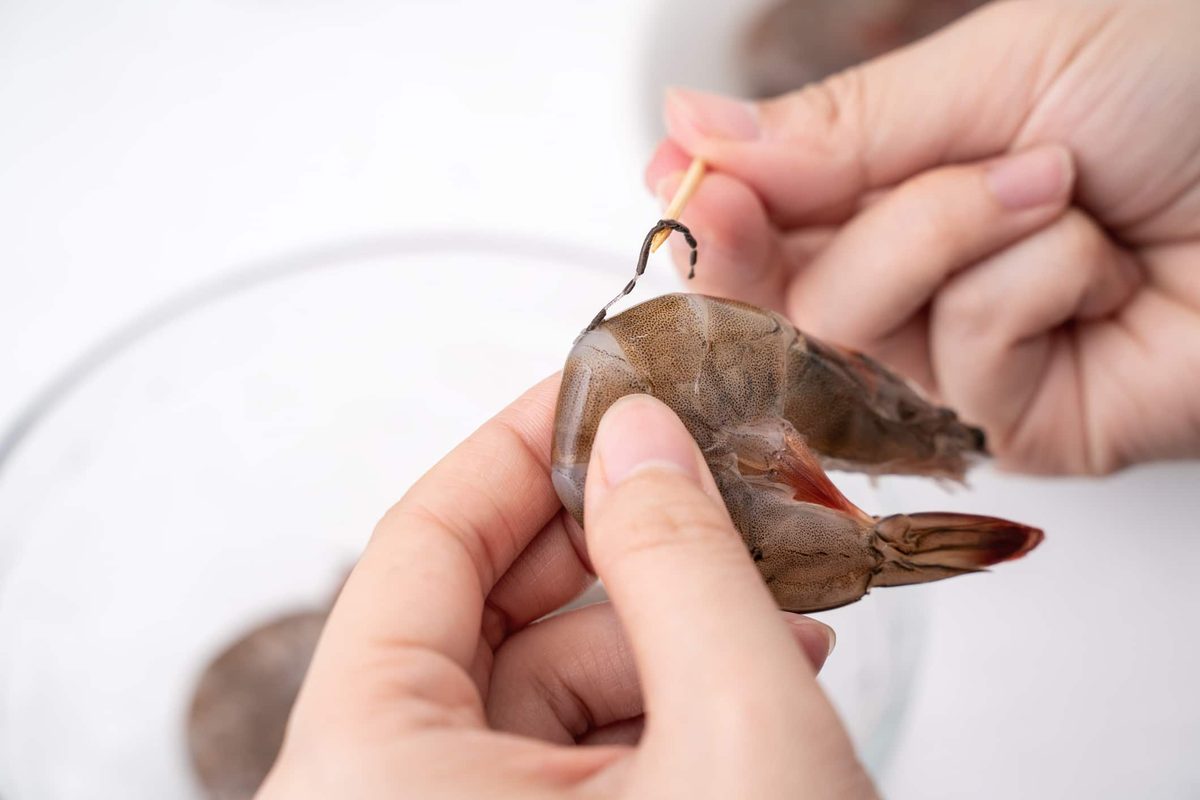
You must have seen it. A dark, thin line running down the back of a cooked shrimp. It looks like a mistake. As if things had gone wrong in the kitchen or, worse, in the sea.
But is it really dangerous?
This black stripe is the shrimp’s digestive tract. It’s the intestines. Inside you will find everything that the animal ate before capture – algae, plankton, sediment or small organic particles. Depending on the shrimp’s diet and the place of harvest, the veins can vary from a faint gray to black or even a greenish-brown shade.
Short answer? You don’t need to delete it. It is safe to eat.
However, most people choose to do so. Why? Texture and taste.
Why does the black line exist
Shrimp are bottom feeders. They search through sand and debris to find food. This process leaves residues in their digestive system. When the shrimp is cooked, this residue remains, visible as a dark line on the dorsum (back).
In some species, especially those caught from the wild, the veins can be quite strong. In farmed shrimp, which are often fed a controlled diet, the line may be lighter or less noticeable.
Is it dirty? Not in the sense that it is contaminated with harmful bacteria. Cooking kills bacteria. The problem is not safety, but aesthetics and mouthfeel.
Does it taste bad?
Opinions are divided here.
Some cooks claim that the vein imparts a slight bitterness, especially if the shrimp has eaten sandy or cloudy material. This grainy taste combined with a metallic or cloudy aftertaste can destroy the delicate sweetness of shellfish.
Others think it doesn’t matter. They cook the shrimp whole, veins and all. The heat neutralizes any off-flavors. The vein becomes softer. It fades into the background.
If you make a simple shrimp garlic butter, your vein may be in the way. When you mix or stuff shrimp into ceviche, you might not even notice it.
How to remove it (if you want)
Removing the vein is called “deveining”. It’s simple, but requires two steps:
- Make a shallow cut. Use a paring knife to cut along the back of the shrimp from head to tail. Do not cut too deep. All you have to do is expose the veins.
- Pull it out. Use the tip of a knife or a toothpick to lift the veins out. Rinse the shrimp under cold water to remove any remaining bits.
Some people prefer to buy pre-deveined shrimp. Others buy them fresh and make them themselves. Fresh shrimp are smaller and cheaper. Pre-deveined shrimp are more convenient, but cost more.
When it matters most
There are situations in which vein removal is worthwhile:
- Big shrimp. The bigger the shrimp, the more obvious the vein. It’s harder to ignore.
- Delicate dishes. The dark line stands out in a light salad or clear broth. It looks unclean.
- Sensitive palates. If you are sensitive to bitter or earthy taste, you’ll want it gone.
For quick stir-f
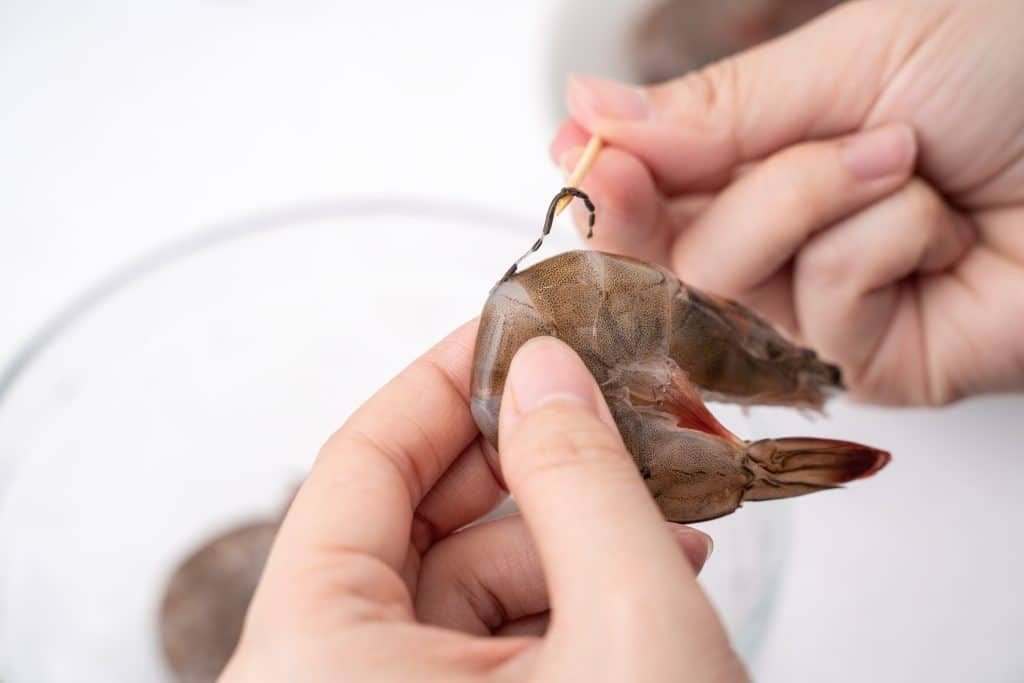

The dark stripe running down the shrimp’s back is not a vein. It is the digestive tract.
It may be called a “vein” because of its appearance, but biologically it is a shrimp’s intestine. This tube contains everything the shrimp has eaten in the sea or in the aquarium. Sand. Organic deposits. Whatever was floating in its environment.
It’s not blood. It’s a waste.
Does the black line affect the taste?
Technically, eating this line won’t hurt you. It is not toxic. But it will change the taste of your shrimp.
Leave it in, you may end up with a grainy texture. This comes from grit particles trapped inside. You may also notice a bitter, earthy taste. That clashes with the sweet, delicate meat of shrimp.
For this reason, many cooks remove it. The most important thing is to eat the shrimp raw. Think ceviche. Think sushi. You don’t want graininess or bitterness in the raw preparation.
How to properly devein shrimp
You don’t need fancy tools. A sharp paring knife or toothpick works well.
- Peel the shell. Remove the head and legs. Keep the tail on if you want it to look good.
- Make a shallow cut along the back. Follow this black line. Don’t go too deep, just enough to open the tract.
- Lift the line out. Carefully pull it out. If it breaks, go back and get the rest of the pieces.
It takes seconds. But it makes a difference in the finished dish.
Is deveining always necessary?
No
In some Asian cuisines, shrimp are often eaten whole, including the digestive tract. It is not considered a problem. With smaller shrimp, the line is often too faint to notice. You probably won’t taste it either.
So should it be removed? Not really. It depends on preference. Some people don’t care. Some people insist on it because of the texture. There is no right or wrong answer, just different standards.
The bottom line
The black line is not dangerous. But removing it improves the dining experience. It removes grit. It removes bitterness. It lets the shrimp taste like shrimp.
It’s a small step. But for many, it’s the difference between good and great.


