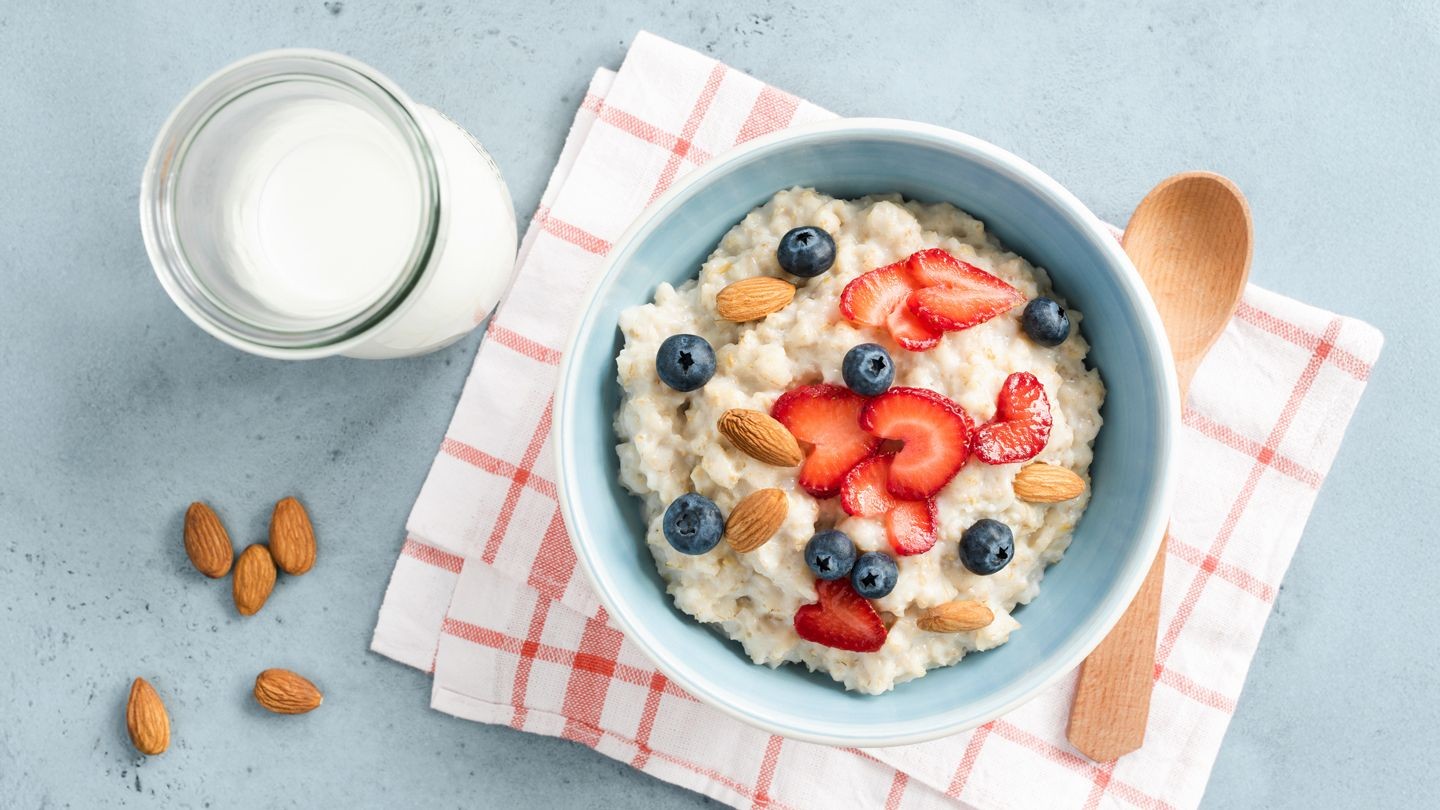
Oatmeal is a long-standing healthy breakfast choice, packed with beta-glucan fiber that can help manage cholesterol and blood sugar. However, a single cup of cooked oatmeal contains only about 5 grams of protein—not enough to make it a truly filling or muscle-supporting meal.
Registered dietitians agree: adding protein is key to transforming oatmeal from a simple carb source into a balanced, sustaining breakfast. This upgrade keeps you fuller longer, stabilizes blood sugar, and helps meet your daily protein needs. Here are nine effective ways to boost the protein content of your morning bowl.
1. Cook with Milk Instead of Water
The simplest upgrade is to swap water for milk. Dairy or high-protein plant-based milk (like soy) adds roughly 8 grams of protein per cup, along with calcium and vitamins. This also creates a richer, creamier texture without extra effort.
2. Stir in Egg Whites for Creaminess
Don’t dismiss this unusual addition. Egg whites blend into oatmeal surprisingly well, providing an extra 3.5 grams of protein per egg white. Add them towards the end of cooking for a fluffier texture—and don’t worry about the flavor; you likely won’t notice it.
3. Add Nuts and Seeds for Crunch and Protein
A couple tablespoons of almonds, walnuts, chia, flax, or hempseeds can add 3 to 6 grams of protein, alongside healthy fats and fiber. Experiment to find your favorites: almonds offer about 4 grams per two tablespoons, while hemp seeds pack in 6 grams.
4. Tofu: A Surprisingly Versatile Protein Boost
Tofu isn’t just for stir-fries. Silken or soft tofu blends seamlessly into sweeter oatmeal, while crumbled or cubed tofu works well in savory versions. Three ounces of silken tofu provides 4 grams of protein, while extra firm tofu offers 6 grams.
5. Cottage Cheese: A Powerful Protein Punch
Half a cup of cottage cheese adds a substantial 12 to 14 grams of protein, much of it slow-digesting casein. This keeps you feeling full for longer. Swirl it into cooked oats or dollop it on top, pairing it with fruit, spices, or a touch of honey.
6. Protein Powder: A Fast Track to High-Protein Oatmeal
If you need a major protein boost, protein powder is your answer. One scoop can add 15 to 25 grams, but be mindful of overall intake. Adults should aim for 1.2 to 1.6 grams of protein per kilogram of body weight daily; supplementation isn’t always necessary. Choose a third-party tested brand with minimal added sugar.
7. Nut Butter: A Delicious and Nutritious Addition
Whether you prefer almond, cashew, hazelnut, or sunflower seed butter, a couple tablespoons adds 7 to 8 grams of protein and healthy fats. Check the label for added sugar; opt for brands made with just nuts and salt.
8. Powdered Peanut Butter: The Low-Calorie Option
If you love peanut butter but want to cut calories, powdered peanut butter delivers the flavor with less fat. One tablespoon provides 3 grams of protein and only 30 calories—a fraction of regular peanut butter.
9. Overnight Oats: Prep Ahead for Protein Power
For busy mornings, overnight oats are a game-changer. Combine oats with milk and Greek yogurt (about ¼ cup per serving adds 6 grams of protein) the night before. This yields a plump, creamy texture with a built-in protein boost.
The Bottom Line
Oatmeal is a heart-healthy, blood-sugar-friendly breakfast, but it’s low in protein on its own. By strategically adding protein sources like milk, eggs, tofu, cottage cheese, or protein powder, you can transform it into a filling, muscle-supporting meal. Experiment to find your preferred combinations for a more satisfying and balanced start to your day.