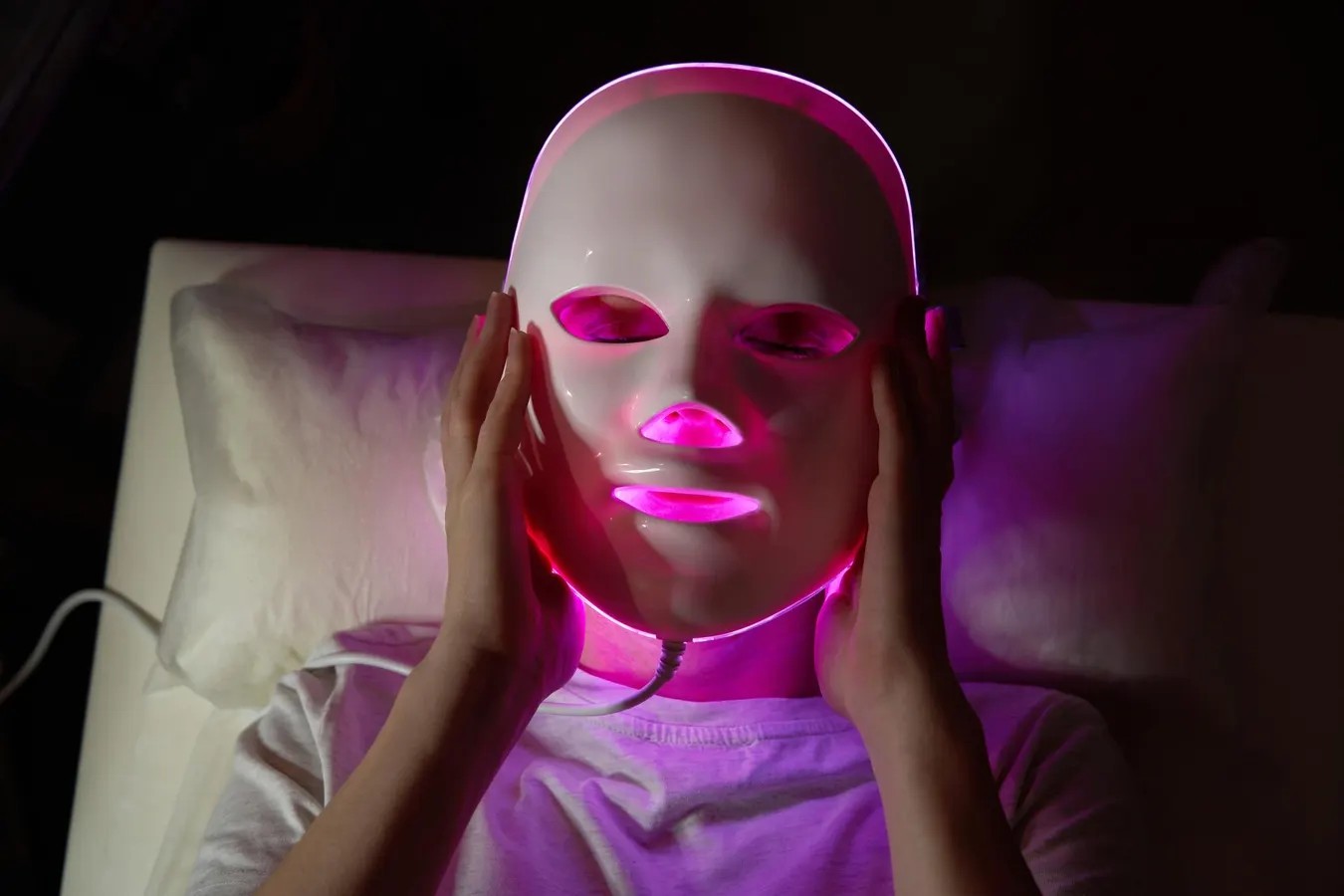
The UK just pulled the plug. Last November, their advertising watchdog banned ads from several major LED face mask brands. Beautaholics. Luyors Retail. Project E Beauty. Silk’n.
They were caught lying. Or at least making claims they weren’t allowed to make. Social media was flooded with posts saying these lights cure acne. Or rosacea. Under UK law, you need a medical license to say that. So they shut it down.
No one has done the same in the U.S. Yet.
That doesn’t mean the science is solid.
The masks look cool, sure. Glowing red panels strapped to your face. It gives off major horror movie vibes. You can’t scroll past Jason Voorhees. That visual shock value is the entire point. Brands are racing to cash in. They promise erased wrinkles. Vanished acne. Reversed sun damage. All while you sit on your couch.
As a doctor who reads this literature for a living, I find the tech fascinating. But here is the cold truth: there is a canyon-sized gap between the marketing copy and what these lights actually do.
The Science Is Real (But Misleading)
These masks use something called photobiomodulation. Or PBM.
Light hits receptors in your mitochondria. Those tiny powerhouses of your cells get energized. ATP goes up. Reactive oxygen species shift. Inflammation drops. Collagen builds up.
That part? It’s biology. It works in a lab.
Collagen makes skin tight. Without it, you sag. Fine lines appear. PBM tries to reverse that cellular decay.
But it depends entirely on the color and the dose.
Red light penetrates surface skin. Near-infrared digs deeper into the dermis. Blue light kills bacteria—specifically Cutibacterium acnes.
Most home masks mix these colors. They use red and infrared as their heavy hitters.
Do The Studies Back It Up?
Sort of.
A 2023 review looked at 31 studies. The results showed significant benefits for acne when using both red and blue light. Skin rejuvenation data was consistent too.
Some trials actually used home devices. One study split participants in half. Literally. Half of the face got light. Half didn’t. Eight weeks later? The lit side was significantly more elastic.
A 2025 trial checked for crow’s feet. Found the mask safe, painless, and effective.
For mild inflammatory acne, the combination of blue and red seems additive. One fights bacteria. The other fights inflammation. They work together.
So why are the ads getting banned?
The Problem Is Your Device
The masks studied in those papers are not the masks you bought on Instagram.
This comes down to physics. Dose matters. How much light actually hits your skin?
Medical devices pump out irradiance of 100 milliwatts per square centimeter or more. Consumer masks? Often twenty or forty. If that. Many don’t even tell you.
There is no rule saying a home LED device has to prove its power.
If the light isn’t strong enough to reach your dermis, it’s just shining on the surface. Useless.
The research quality is shaky too. Small groups. Short timeframes. Industry-funded. A 2024 analysis pointed out that many studies don’t report the irradiance levels they used. We don’t even know the exact dose tested.
The evidence is patchy. It holds up for photoaging. For mild acne. But for melasma? Rosacea? Hyperpigmentation? The data is thin.
Then there is fit.
If the mask doesn’t hug your face, the light reflects off into the air. Just like that. Up to 90% energy loss. Two centimeters of air gap and you’re treating nothing but cheekbones and nose bridges.
What Doctors Actually Say
Evidence-based dermatologists admit LED can work. But temper your expectations.
This isn’t magic. It’s cumulative dose. Months of regular use might get you close to clinical levels. A few sessions won’t change your face overnight.
A 2024 journal review agreed. The biology is valid. The best data is for professional tools. Home use requires knowing your numbers.
How To Not Get Scammed
Want to try it? Buy smart.
- Check for FDA 510(k). This means it cleared safety benchmarks. Note that “cleared” is not “approved.” Most devices get clearance for low-risk claims, not approval for medical cures.
- Look at wavelengths. Real specs list nanometers. Red should be 630 or 6.60 nm. Blue at 415. Infrared at 830 to 850. If they don’t list this, keep scrolling.
- Power matters. Good mid-range medical devices cost between $150 and $500. You pay for clinical testing and precise LEDs. Cheap masks under $150 use inconsistent broadband light with no safety checks.
- Protect your eyes. Or ensure the mask does. And talk to a doctor if you take photosensitizing drugs. Certain antibiotics. Retinoids. NSAIDs. Light sensitivity spikes.
The biology is real. The data shows effects. But it is imperfect data.
Consistent use of a proper device might improve texture and fine lines. It won’t replace a dermatologist if you have serious disease. And it certainly won’t transform you like the influencers promise.
Treat it like any other wellness purchase. Scrutinize the specs. Calibrate your expectations. Maybe check if your cheekbones are causing reflection losses first.