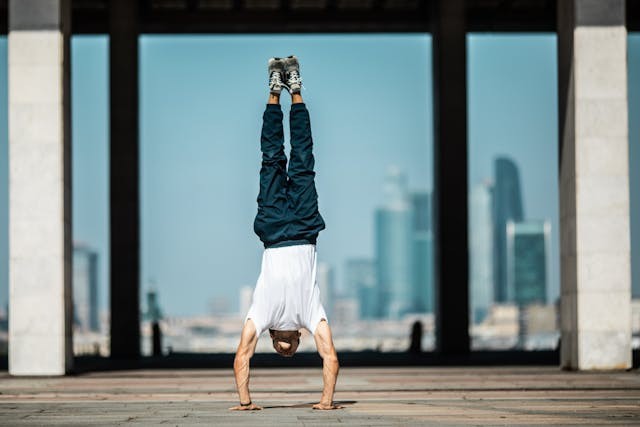
Calisthenics isn’t just for people who travel or hate weights. It’s for anyone who wants to control their own body. The discipline relies on leverage, not plates. And the best tools right now don’t just count reps—they teach you how to hang upside down without falling on your head.
Mobile apps are huge now. They ranked number two in the American College of Sports Medicine’s 2025 Global Fitness Trends Survey. Bodyweight training has been climbing steadily for ten years. It fits in a hotel room. A studio apartment. A park.
The best apps don’t add pushups to a generic workout plan. They restructure movement. They use progressive overload through body angle. Leverage. Skill acquisition.
We tested twelve of them. We looked for logic in the progression. Did the form guidance actually help? Did it track your skills, not just your calories? We avoided the fluff. No AI promises we couldn’t verify. Just what works when you’re tired and trying to hit a muscle-up.
The Quick Hit List
You don’t have time for twenty paragraphs of review. Here’s who wins where:
- MadMuscles: Best personalized plans for men starting out.
- Nike Training Club: The strongest free option for general conditioning.
- Caliathletics: Best for learning pull-ups and muscle-ups from scratch.
- Freeletics: If you want to sweat buckets and lose weight fast.
- Movement Athlete: Best for assessment-driven, custom programs.
- Thenx: Chris Heria’s visual tutorials are unmatched.
Paid apps matter. Free versions usually lock the advanced stuff behind a paywall. And that’s fine. You’re buying structure. You’re buying the tutorial video that finally shows you how to tuck into a handstand without crumbling.
How We Actually Tested This
We spent four weeks using these apps. Not as beginners. We used an intermediate profile. Someone who could already do a clean pull-up. Who held hollow positions without shaking. Who wanted that elusive muscle-up.
We switched devices. iOS. Android. We worked out in gyms. In living rooms. Under rusty pull-up bars outside.
The scoring was blunt. Progression logic and skill pathways got the heaviest weight at 35%. Programming and recovery got 20%. Mobility got 15%. UX and form cues got 15%. Equipment flexibility got 15%.
We didn’t care about “cool features.” We cared about whether the app fixed its bugs. Whether the team seemed active. Whether the workout calendar made sense or just created more admin work for you.
1. MadMuscles
Best for: Personalized bodyweight plans for men.
It asks questions first. Goals. Frequency. Equipment. Then it builds a plan. It feels less like a street-workout vibe and more like a structured strength course.
Good if you want results without jumping between ten different apps. Bad if you want elite planche mappings right out of the gate. The video demos are clear. The tracking includes steps and calories, which some might find cluttered. Others need the data.
2. Caliathletics
Best for: Skill progression pathways.
This treats calisthenics like a ladder. Not a highlight reel. It breaks down pull-ups, muscle-ups, handstands. The tutorials are solid for advanced skills.
If you’re an intermediate user, this feels like a coach in your pocket. Beginners might find the ramp up steep. But once you click, the logic is undeniable. It’s the cleanest pick for skill mapping.
3. Madbarz
Best for: Street-workout routines and community.
Short sessions. Circuits. Visible structure. It leans into the “street” aesthetic but keeps the programming tight. Sharing routines is easy. Customization is good.
It’s less technical on the levers and planches. The circuits can feel repetitive if you don’t mix it up. But for keeping habits alive? It works.
4. Thenx
Best for: Visual learners and Chris Heria’s method.
Chris Heria runs this. If you like his YouTube style, this app will feel like home. Crisp videos. Strong focus on control and technique.
It’s excellent for muscle-up education. But the programming flexibility is lower here. You follow the coach’s style or you look elsewhere. One size fits most. Just not all.
5. Freeletics
Best for: HIIT and metabolic conditioning.
Over 54 million users. They focus on volume. Intensity. Fat loss. The AI adapts based on your feedback. If you rate a session “hard,” the next one backs off slightly.
It’s not for learning a handstand. It’s for getting athletic. For traveling. For using nothing but the floor. If your goal is a shredded look through conditioning, this is your engine.
6. Nike Training Club
Best for: Free, high-production value.
It’s free. In most places. It includes yoga, mobility, strength. It’s not a pure calisthenics tool. No complex skill trees here.
But it’s polished. It builds consistency. If you just want to show up and move well without paying a cent, NTC is hard to beat. You won’t master a planche here. You will feel good after every session.
7. Movement Athlete
Best for: Individual assessments.
They assess you first. Physical tests determine your starting point. This prevents the beginner-from-hell syndrome where you try things your joints aren’t ready for.
The subscription is pricier. Onboarding takes time. But if you want individualized progression logic? This is top-tier. It tracks the hard stuff: pull-ups, holds, transitions.
8. Calisthenics Coach
Best for: Leveraging leverage.
This app teaches you how to make a basic exercise harder without adding weight. Tempo changes. Body angles. Variations.
It’s useful for military fitness tests or just understanding the mechanics of strength. The interface isn’t as flashy as the big brands. But the overload principles are sound.
9. FitnessFAST
Best for: Minimalist, no-equipment consistency.
Hotel rooms. Small spaces. Five minutes of work. That’s the promise. No bars. No rings. Just you and gravity.
It’s not for advanced skills. It’s for momentum. When you’ve missed a week and just need to move, this gets the job done without overcomplicating it.
10. GMB Fitness
Best for: Mobility and playful movement.
GMB is different. Less “street workout” aesthetic. More “joint health” and “movement quality.” It blends strength with mobility in a way that feels almost like play.
If traditional gym work bores you, this might click. It builds body control from the ground up. The platform isn’t always native-app friendly though. You’re buying programs more than using an app interface.
11. Athlean-X
Best for: Aesthetics and science-based logic.
Jeff Cavaliere’s brain behind the plans. Strength coaching logic applied to home workouts. It’s not pure calisthenics in the park sense. It’s about performance and physique.
If you want muscle gain with bodyweight tools, this bridges the gap between bro-science and biomechanics. It varies by plan. Check if the current module fits your goal.
12. Body by You / Bodyweight Strength
Best for: Beginners seeking base strength.
Lighter entry. Good for people who have never touched a bar before. It focuses on establishing base strength before adding complexity.
The interface varies by device. The web version can feel clunky on mobile. But the foundation is there. Start simple. Get strong. Then upgrade.
The Bottom Line
There is no single “best” app. Only the best one for where you are.
Want to hang from bars and master levers? Look at Caliathletics or Madbarz. Want to burn calories and travel light? Freeletics or NTC. Want a structured coaching feel? MadMuscles or Thenx.
Stop waiting for the perfect gym membership. The weight you’re carrying around has always been your best tool. You just needed someone to tell you how to move it.