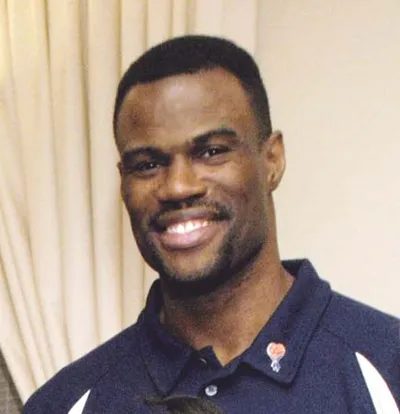
David Robinson didn’t just walk onto the NBA scene. He arrived with a commission. Born on August 6, 1965, in Key West, Florida, Robinson carried the weight of service alongside his athletic potential. He became one of the most dominant centers in basketball history, anchoring the San Antonio Spurs to back-to-back championships in 1999 and 2003.
Before he was “The Admiral,” he was just a kid from the Navy. He played at the U.S. Naval Academy in Annapolis, Maryland. The team made the NCAA tournament in 1985, 1986, and 1987. Robinson was arguably the best college player in the country by his final season. But the Spurs took a massive risk in 1987. They selected him first overall. The catch? He had to serve two years of active duty in the U.S. Navy. He wouldn’t play for San Antonio during that time. He wouldn’t even play against top-flight competition. It was a gamble. Some observers thought it was a bad one.
He served as a civil-engineering officer. Then, in 1989, he finally joined the Spurs.
The debut was explosive. He averaged 24.3 points, 12 rebounds, and 3.9 blocked shots per game. He won Rookie of the Year. The Spurs won 35 more games than the previous season. That was the best one-year improvement in league history at the time. The following year, he made the All-NBA first team and the defensive first team. The Spurs lost in the first round of the playoffs.
Here is where the narrative twisted. Robinson was graceful. He used finesse near the basket. This ran counter to the traditional physicality of NBA centers. Critics started labeling him “soft.” They said he couldn’t win big games.
He ignored the noise. He continued to accumulate accolades. He was named Defensive Player of the Year in 1992. He took home MVP honors in 1995. He made the list of the 50 greatest players in NBA history in 1996. Yet his teams routinely disappointed in the postseason. The individual brilliance wasn’t translating to rings.
That changed in the 1998–99 season.
Robinson teamed up with second-year power forward Tim Duncan. It wasn’t just chemistry. It was necessity. Duncan provided the power. Robinson provided the grace. Together, they led the Spurs to the franchise’s first NBA championship. It broke the drought. It broke the “soft” label.
They did it again. The duo won another title in the 2002–03 season. That was Robinson’s final act. He retired after that run.
At the time of his retirement, his stats were staggering. He ranked among the top 25 players in NBA history in career points. He was top-tier in rebounds. He sat fourth all-time in blocked shots.
His reach extended beyond the NBA. He won gold with the U.S. men’s basketball team at the 1992 Barcelona Olympics. The “Dream Team.” He added a second gold medal at the 1996 Atlanta Games. The dominance was consistent.
In 2009, he was elected to the Naismith Memorial Basketball Hall of Fame. The gamble had paid off. The service had shaped him. The championships validated it all. But does the legacy of “The Admiral” still loom as large over modern big men, or has the game simply moved on? The stats stay. The rings stay. The questions about his softness? Those are long settled, but the image of a player who could dunk with one hand and pass with the other remains.