
There is no such thing as a perfect baseball stadium.
You want the peanut vendor within arm’s reach? Fine. You want the mustard ratio on the hot dog to be geometrically precise? Sure. You want the home team to win every single game and the guy in the row behind you to keep his beer and his opinions to himself? Dream on.
Life isn’t perfect. Neither is the game. That’s why Red Sox and Cubs fans love it. It’s the broken dreams. The near misses. The heartbreak that hits just as hard as the joy. Baseball is a lot like existence in that regard. You never know what pitch is coming. All you can do is prepare, grip the bat tighter, and hope the umpire has a soft spot for you.
The best fields aren’t the shiny, sterile arenas that prioritize efficiency over soul. Nationals Park in DC? It’s clean. The parking is easy. The food is decent. But nobody makes a pilgrimage there. Fans don’t travel to see a scoreboard; they travel for lore. They go to Fenway and Wrigley. These places are rife with quirks and architectural sins, but they are knee-deep in history. The new Yankee Stadium is lovely, sure. But it isn’t the house that Ruth built.
Whether you’re counting your blessings or waiting for that final strike, there are ten baseball fields any self-respecting fan needs to visit before they check out.
10: Oriole Park at Camden Yards
Baltimore’s Oriole Park at Camden Yards opened in 1992 with a specific kind of mojo. It’s located just blocks from where George Herman Ruth grew up. The name “Babe” isn’t just a nickname here; it’s geography.
Fans flock here not just for the proximity to the Inner Harbor, but because the park feels like a throwback while serving modern comforts. It looks like an old-school brick cathedral but has the amenities of the 21st century. It’s widely credited with killing the era of the soulless, concrete multipurpose stadiums. This park started the trend: brick facades, green walls, and an intimacy that big-box arenas can’t replicate.
With a capacity of 45,971, it feels surprisingly close to the action. The field was built on an old railroad center, a nod to Baltimore’s industrial past. It’s also built on Babe Ruth history. The center field spot is right where Ruth’s childhood home stood. His family’s café was nearby, too.
Camden Yards has its own legends. In 1992, Cal Ripken Jr. broke Lou Gehrig’s consecutive games played record right there on the dirt. The stadium erupted. Twenty minutes of applause. You can’t buy that. It’s an Iron Man’s house, and the iron runs deep in the foundation.
9: PNC Park
The Pittsburgh Pirates might not command the same reverence as the six-time champion Steelers or the Stanley Cup-winning Penguins, but PNC Park commands respect in the baseball world.
It’s set along the Allegheny River. The views of downtown Pittsburgh are unmatched. The stadium is intimate. The highest seat is only 88 feet above the field. You’re close enough to hear the players talk trash.
The snacks are a point of pride. Primanti Brothers sandwiches. Meat, cheese, coleslaw, and fries stacked directly between the bread. It’s messy. It’s essential. On game days, boats line the riverbanks. Fans tailgate on the water, hoping to snag a stray ball. Like Camden Yards, PNC Park pays homage to the city. The outfield wall is 21 feet high. Why? Because Roberto Clemente wore number 21. The park overlooks the Clemente Bridge, painted Pirate yellow. (Though one wonders if the Steelers’ color palette had a hand in that decision.)
The Pirates may be the also-rans in a town of winners, but their park is tough to beat.
8: Coors Field
Denver plays by different rules. The altitude is high. The air is thin. And the baseball bounces like a superball.
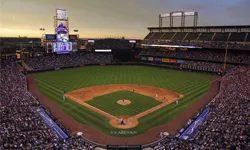
The thin air at Coors Field doesn’t just change the view; it changes the physics. Since opening in 1995, the Colorado Rockies’ home has been a statistical anomaly, a place where gravity takes a back seat to altitude. If you believe the marketing, every sip of Coors beer is accompanied by the sight of Rockies players celebrating. In reality, the players are just trying to survive the offensive explosion.
The numbers don’t lie. In 1999 alone, batters hammered 303 home runs at the park. The ball travels nearly 9 percent farther here than it does at sea level. For hitters, it’s paradise. For pitchers, it’s a nightmare. The lack of atmospheric density makes breaking balls, especially curveballs, nearly impossible to command. You throw it, and it floats. You try to paint the corner, and it sails into the stands. It is a pitcher’s worst case scenario, dressed up as a fan’s dream.
Where to Sit When You Can’t Afford Premium Views
If your budget doesn’t stretch to premium seating, the Rockpile offers a solution. Tickets there start at just $4. The seats are bleachers located high above center field. You are as far from home plate as possible while still being inside the ballpark. It’s distant. It’s loud. The atmosphere, however, is unmatched.
There is another option for those who want a specific view. Head to the 20th row of the upper deck. The seats are purple. You are sitting exactly one mile above sea level. The elevation hits you before the game even starts. You feel the difference in your ears. You see the ball move differently. It’s a distinct experience that sea-level parks can’t replicate.
Pre-History Before Baseball History
Coors Field lacks the century-old charm of Fenway or Wrigley. It doesn’t have the ghost of games past haunting its brickwork. But it does have dinosaur bones. During construction, workers unearthed fossils. The Rockies responded by naming their mascot Dinger, a triceratops. It’s a quirky detail that anchors the park in Colorado’s geologic past rather than its sports past. The stadium is modern, but the land is ancient.
Petco Park’s Stucco and Sandstone Contrast
Moving to San Diego, Petco Park rejects the retro-brick trend that dominated stadium design in the late 90s and early 2000s. The San Diego Padres’ home is built differently. The exterior uses stucco and sandstone. White-painted steel frames the structure. Palm trees line the landscaping. It feels less like a baseball stadium and more like a high-end resort.
The design of Petco Park incorporates the old Western Metal Supply Co. Building, preserving a piece of local industrial heritage within the stadium’s footprint.
The park doesn’t just look different; it functions differently. The Park in the Park is an open space above the outfield. Fans can pay a small fee to watch the game from there. When there is no game, it’s just a regular public park. It blurs the line between entertainment venue and community space.
The old Western Metal Supply Co. Building is integrated into the design. It houses the team store, a restaurant, and rooftop seats. It’s a structural homage to the site’s history. The surrounding neighborhood has been revitalized. Funky shops dot the streets. Public transportation makes access easy. You aren’t just driving to a game; you’re entering a district.
Weather as a Design Element
San Diego
Safeco Field’s Engineering Feat and Gastronomic Risks
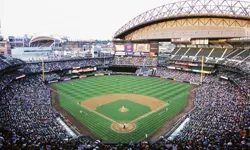
Let’s be honest: the Seattle Mariners might lack a certain athletic consistency, but Safeco Field (now T-Mobile Park, though we’re sticking to the era implied by the text) is an absolute triumph of structural design. The retractable roof is no joke. It spans nine acres and tips the scales at 22 million pounds. That is a lot of steel hovering over your head. Try not to fixate on the physics of 22 million pounds descending on you while you’re trying to enjoy a bottom-of-the-ninth rally.
Without that roof, the park’s reputation would likely be built entirely on rainouts. If you are one of those people who can’t shake the anxiety of falling debris, stick to left field. That section remains exposed, acting as a ventilation system for the entire stadium. It keeps the aroma of thousands of fans devouring garlic fries from becoming a physical substance you have to breathe. Plus, the open sky offers a pristine view of Mount Rainier, provided the weather gods are kind.
But the roof isn’t the only heavy thing you’ll encounter. The food scene at Safeco is legitimately top-tier, which means you need to pack accordingly. Leave the button-downs and rigid denim at home. Elastic waistbands are your new best friend here. The menu reads like a culinary tour of the world: sushi, crepes, pad thai, barbecue. And yes, those famous garlic fries. The kiss-cam operators may want to wear gas masks after a particularly aggressive snack break.
Marlins Park’s Aquatic Ambitions
“You know what would make baseball better? Fish.”
No, Roger Maris probably didn’t say that. It’s likely apocryphal, but it fits the vibe of Miami’s Marlins Park anyway. This stadium is a statement piece. It is the newest ballpark in the league at the time of writing, and it is also the smallest, seating just 37,442 fans. That scarcity of seats forces intimacy.
The design intent is clear: evoke a futuristic, forward-looking Miami, but with a marine twist. Behind home plate, you’ll find two 450-gallon aquariums. Each holds 50 tropical fish. We have to assume the glass is shatter-proof. If a foul ball cracked one of those tanks, PETA would descend on the front office like a swarm of angry bees.
Jealous of the fish? You can swim yourself. Behind the left-field wall sits the Clevelander, a club that serves food and drinks and, crucially, features an actual swimming pool. The menu doubles down on local flavor with Cuban sandwiches and stone crabs. There is one strict rule, though: wait at least an hour after eating before you jump in the water. Digestion and chlorinated pools do not mix well.
Climate Control and Intimacy
If the aquatic exhibits or the poolside crowds aren’t enough to distract you, the actual baseball might be. Marlins Park is fully air-conditioned. This is a massive advantage in Florida, where the heat can feel like a physical weight. The stadium maintains a constant 75 degrees Fahrenheit (23.9 degrees Celsius). You can watch a game in a jacket while everyone else outside is melting.
The small capacity is a double-edged sword but ultimately a benefit for the fan experience. Almost every seat feels close to the action. There is no escaping the noise, the heat of the battle, or the players. It is intimate. Brutal. Engaging.
Citi Field’s Suburban Sanctuary
Then there is Citi Field. Located in Queens, it sits in stark contrast to the urban intensity of Manhattan and the aquatic gimmickry of Miami. It was built to replace the aging Shea Stadium, offering a modern, classic ballpark aesthetic that nods to the past while embracing contemporary amenities.
The park is known for its spaciousness and its location in Flushing Meadows-Corona Park. Unlike the enclosed nature of Marlins Park, Citi Field is an open-air experience, subject
The Mets’ Humble Kingdom in Queens
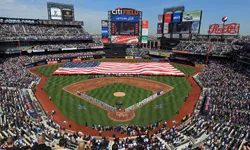
Let the Manhattanites scoff at the bridge-and-tunnel commuters. At Citi Field, those bridges are the crown jewels of the architectural design. The park sits right next to the ghost of Shea Stadium, a deliberate nod to history, but more importantly, it positions the Mets as the moral opposite of their Bronx rivals. The stadium isn’t massive. Tickets won’t break the bank. It rarely sells out. This makes it the ideal sanctuary for a mid-week escape, a perfect spot to play hooky on a Tuesday afternoon when the work week drags on.
The nostalgia factor is baked into the turf. When a Met launches a homer, the iconic giant apple rises from behind center field, just like it did in the old days. It’s a charming tradition, even if the Mets’ frequent struggles mean you don’t get to see it that often. But if you’re in New York, despise George Steinbrenner’s legacy, and reject the corporate gloss of the Yankees, the Mets offer a genuine alternative. It’s baseball stripped of the greed. How do you like them apples?
AT&T Park’s Tech-Forward Charm
Some might argue that the Giants’ past was tainted by steroids (cough Barry Bonds cough ), but there is no denying that AT&T Park enhances the fan experience regardless of the player’s reputation. The venue offers stunning views of the San Francisco Bay, but the real spectacle is the giant Coca-Cola bottle towering over the left-field bleachers. When the Giants homer, the bottle lights up and spews bubbles into the air.
The gimmick doesn’t stop there. Inside that massive bottle is a slide, allowing fans to abandon the game entirely to slide down into the concourse. It’s pure chaos. Then there is McCovey Cove, the body of water beyond the right-field fence. Fans in boats drop anchor there, hoping to snag stray balls out of the water—a distinctly San Francisco twist on outfield entertainment. The park is also famous for boasting one of the largest public WiFi hotspots in the world. Given its proximity to Silicon Valley, the nerd quotient at any Giants home game is predictably sky-high.
If you actually care about the sport and not the Build-a-Bear Workshop located behind the outfield wall, know that AT&T Park is not exactly a hitter’s paradise. It suppresses offense. Yet, it remains the hallowed ground where Barry Bonds hit his 500th, 600th, and 700th career home runs. He never took steroids, amirite? The irony hangs in the air as thick as the Bay fog.
The Ice House on Addison
Now we arrive at number two, the place where time seems to stand still. Wrigley Field isn’t just a stadium; it is a museum piece that happens to host professional baseball. Located on Chicago’s North Side, it is the oldest ballpark in the National League still in use, and it shows. The ivy-covered walls are not a cosmetic choice; they are a structural necessity, requiring fans to climb ladders to help maintain the greenery.
The manual scoreboard is another relic that refuses to die. It takes ten minutes to change the numbers after a home run, adding a layer of patience to the game that modern stadiums have largely abandoned. And let’s talk about the bleachers. The left-field bleachers are famous for their proximity to the action and,
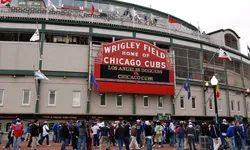
The despair you feel at Wrigley Field is specific. It’s a historical weight that only the Chicago Cubs can deliver. The park sits tucked into the Wrigleyville neighborhood, a spot so dense with devotion that fans have literally built seating on rooftops just to catch a glimpse of play. It is the second-oldest major league ballpark still in regular operation, but the timeline is brutal. Built in 1914, it has outlasted nearly a century of futility. The Cubs haven’t won a World Series since 1908.
That gap between construction and championship creates a unique tension. Fans still pack the outfield bleachers, adhering to the tradition of retrieving home run balls hit by visiting teams. There are no modern distractions here. No massive video boards. No sprawling concourses with craft beer breweries. You are there for the game, played in a space where the same corners have existed for almost a hundred years. If you plan to visit, time it right. Come after the ivy has fully taken over the outfield walls. April is a mistake. The grass is brown, the wind bites, and Chicago is still cold. You want the green. You want the history.
The Oldest Stadium and the Green Monster
Fenway Park is smaller. It is dirtier. It is old. The same descriptors apply to your mother, but let’s focus on the Boston Red Sox’s cathedral.
America’s pastime has echoed off these walls since 1912. Bostonians have been complaining about their team for just as long. There is no WiFi here. No shopping. No playgrounds to distract you from the fact that you are watching baseball in its oldest surviving container. This is a place where the architecture dictates the experience.
The centerpiece is the Green Monster. That lone, towering left-field wall changes how you watch the game. It forces pitchers to adjust their high-and-tight approach. It turns fly outs into potential hits. It is a physical manifestation of Boston’s stubbornness.
Then there is the red seat in the right field bleachers. It marks the spot where Ted Williams hit what is recorded as the longest measurable home run in Fenway history. The ball traveled 502 feet. Williams is worshipped in Beantown. You do not mock him. You do not make cryogenics jokes. You leave any animosity at the gate, or you will face the wrath of fans who throw balls wicked hard. It is a shrine. Treat it with respect.
Where to Go When the Season Opens
Both parks offer something different than the concrete bowls of newer stadiums. Wrigley offers a neighborhood feel, a residential intimacy that makes every game feel like a local event. Fenway offers a museum atmosphere, where every crack in the plaster feels like a artifact.
Which one should you choose? It depends on what you value more. Do you want the organic chaos of Chicago’s Wrigleyville, where the ivy grows wild and the bleachers are steep? Or do you prefer the tight, intimate confines of Boston, where you can almost touch the Green Monster from certain seats?
There is no right answer. There is only the game. The score. The sound of the bat. The history hanging in the air. You stand in those seats and you remember that baseball is not just a sport. It is a time capsule. And these two parks are the best ones still in use.