April 10, 25. Pacific splashdown. Four bodies returning home.
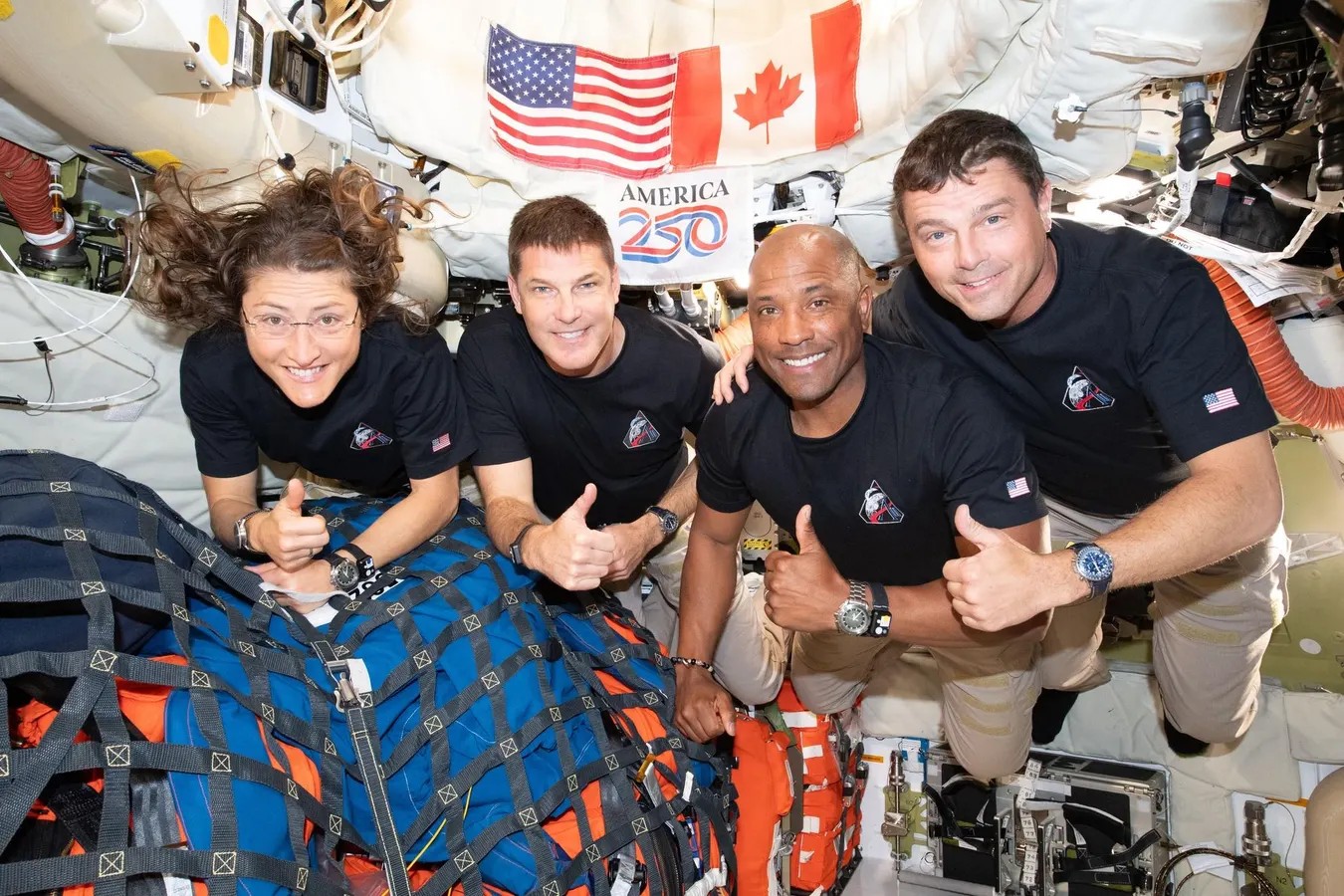
The headlines screamed about the mileage. Artemis II. 252,736 miles. Further than any human has ever traveled. Reid Wiseman. Victor Glover. Christina Koch. Jeremy Hansen. We cheered the milestone because it’s supposed to make us feel like giants.
We ignored the small box tucked inside the Orion capsule.
Tiny chips of bone marrow. Living tissue. Grown from the astronauts’ own blood. They went where no bone marrow had gone before to see if radiation and zero gravity would tear them apart.
That project is called AVATAR. And frankly, it’s not about the astronauts. It’s about us. Sitting on Earth. Aging. Breaking.
Gravity Lies
On the ground, cells lie.
In a petri dish, gravity crushes them flat. Thin layers. 2D shadows of biology. They don’t behave like organs. They barely behave like life.
In space, that gravity vanishes. The cells float. They self-assemble. Three-dimensional structures form naturally, looking and acting like actual human organs and tumors for the first time in lab history. Even proteins grown as crystals are cleaner here, more perfect, fitting into drug designs like a key slides into a lock without scraping.
Then there is the aging factor. Space is a time machine.
Astronauts experience rapid aging. Bone density plummets like severe osteoporosis. Muscles waste away in weeks. Hearts remodel themselves, beating against an invisible vacuum. No smoking. No bad diet. No sedentary lifestyle confounding the data. Just pure, accelerated biology.
What happens to a 40-year-old in orbit mirrors a bedridden patient after hip replacement, or a cancer patient under siege by chemotherapy. These are shared pathways. Research on the ISS already changed how we treat fluid shifts and bone loss on Earth. This isn’t metaphorical. It’s mechanics.
The Experiment Inside AVATAR
Harvard’s Wyss Institute harvested blood from all four crew members.
From that blood, they grew miniature copies of the astronauts’ bone marrow. This is the factory in your body that builds blood cells, also the organ most terrified of radiation. One set flew to the Moon. One stayed home, grounded in a lab.
Now, they compare them. Cell by cell.
The goal is simple but terrifying. See how deep space switched genes on or off. See how living human tissue breaks.
The medical implication hits hard. Right now, chemotherapy is limited by what your bone marrow can take. Radiation oncologists walk a tightrope, guessing how much damage you can endure. A model like AVATAR changes that. You grow your own marrow. Stress it in the lab. See how your specific genes react before you even get sick.
Personalized cancer treatment isn’t a slogan anymore. It’s data waiting to be read. Artemis II brings back the proof that we can map the response of tissue before we break it. That’s different. That’s powerful.
Space medicine isn’t separate from public health. They solve the same engineering problem: keep a person alive with minimal resources, no ambulance in sight.
Emergency Kits for Everyone
The tech developed for the ISS isn’t stuck in orbit.
When NASA astronaut Michael Finkee went mute for twenty minutes on the ISS in January, 25, nobody could rush a doctor up there. Wearable monitors did. Remote diagnostics saved him. The mission ended early, but the tools worked.
Those portable ultrasounds. Those point-of-care blood analyzers. The AI triage systems. They are the same tools keeping patients alive in rural trauma bays, refugee camps, or during supply chain collapses. During the pandemic, digital health tools born from space logic held health systems together when they were seconds from breaking.
If you can diagnose an astronaut in low Earth orbit, you can diagnose a farmer three hundred miles from a hospital. The benefits flow both ways. Always have.
Who Owns the Sky?
The International Space Station is dying. It retires in the 30s.
NASA won’t build a replacement. They want to be on the Moon. The Low Earth Orbit (LEO) laboratory slot goes to corporations.
Look at the lineup:
* Haven (Vast Space)
* Starlab (Voyager Technologies, Airbus, Mitsubishi)
* Orbital Reef (Blue Origin, Sierra Space)
* Axiom Station (Axiom)
This shifts the game entirely.
The ISS ran on international treaties. Open science. Shared data. A communal effort. These commercial stations answer to shareholders. They sell access. The customer is a pharma company, a wealthy individual, a government willing to pay top dollar. There is no treaty forcing them to share the data they buy.
Will the science remain public? Will it be locked behind a paywall? We have to demand that these orbital labs don’t become private clubs. The data coming out of Starlab and others needs to serve more than the investors.
The Data Lands
The bone marrow chips from Artemis II are here now.
They carry information we’ve never had. How human tissue actually behaves in deep radiation fields. How genes toggle when gravity isn’t pulling you down. This is proof that personalized, tissue-level medicine can work in the most hostile environment possible.
It reinforces a pattern from fifty years of space flight: what keeps the astronauts alive, keeps us alive too.
Space has always been sold as a frontier for everyone. The hardware returns to Earth. The biology stays complex. The challenge now is ensuring that the data from the Moon doesn’t just benefit those who could afford a seat on the ship. It has to benefit the rest of us, still on the ground, waiting to see what our own blood would do in the dark.
Dr. Shreenik Kundu. Dr. Alaina Rajagopal. Dr. Owais Durrani. They contributed. The work continues. The questions remain.