The official start date of the Bundibugyo ebola outbreak in Congo was wrong.
Congo declared the emergency in May. At that point, the chief medical officer in the Mongbwalu health zone, Ruben Deja Dhenyo, stood firm. He told reporters there was no epidemic. The recorded cases didn’t look like it.
He wasn’t lying. He was describing the blind spot of his own surveillance system. What he saw wasn’t an outbreak. It was noise. Drug use among young people in Mongbwalu was rampant. Tramadol and diazepam mixed into soft drinks. People were sick, but the sickness didn’t match the checklist.
Seven days after that denial, the government declared a Bundibugyo virus outbreak. This is a distinct strain of Ebola. There is no licensed vaccine for it. No specific treatment exists. By early August, it had become the second-largest outbreak on record. 3,802 cases. 1,707 dead.
But the clock started ticking much earlier.
500 Unrecorded Deaths in Mongbwalu
The disconnect between official data and ground reality wasn’t an oversight. It was structural. A field study funded by the WHO and led by anthropologist Jules Villa, University of Bunia researcher Roger Buju, and social scientist Alain Alithum Bero reveals the scale of the silence.
They spent over a month in Mongbwalu before the formal declaration. They interviewed 97 locals. They looked for a specific pattern: households that had lost two or more members to Ebola-like symptoms within 21 days. They read the biographies recited at funerals.
The result? They counted more than 500 suspected case deaths between mid-January and the May declaration.
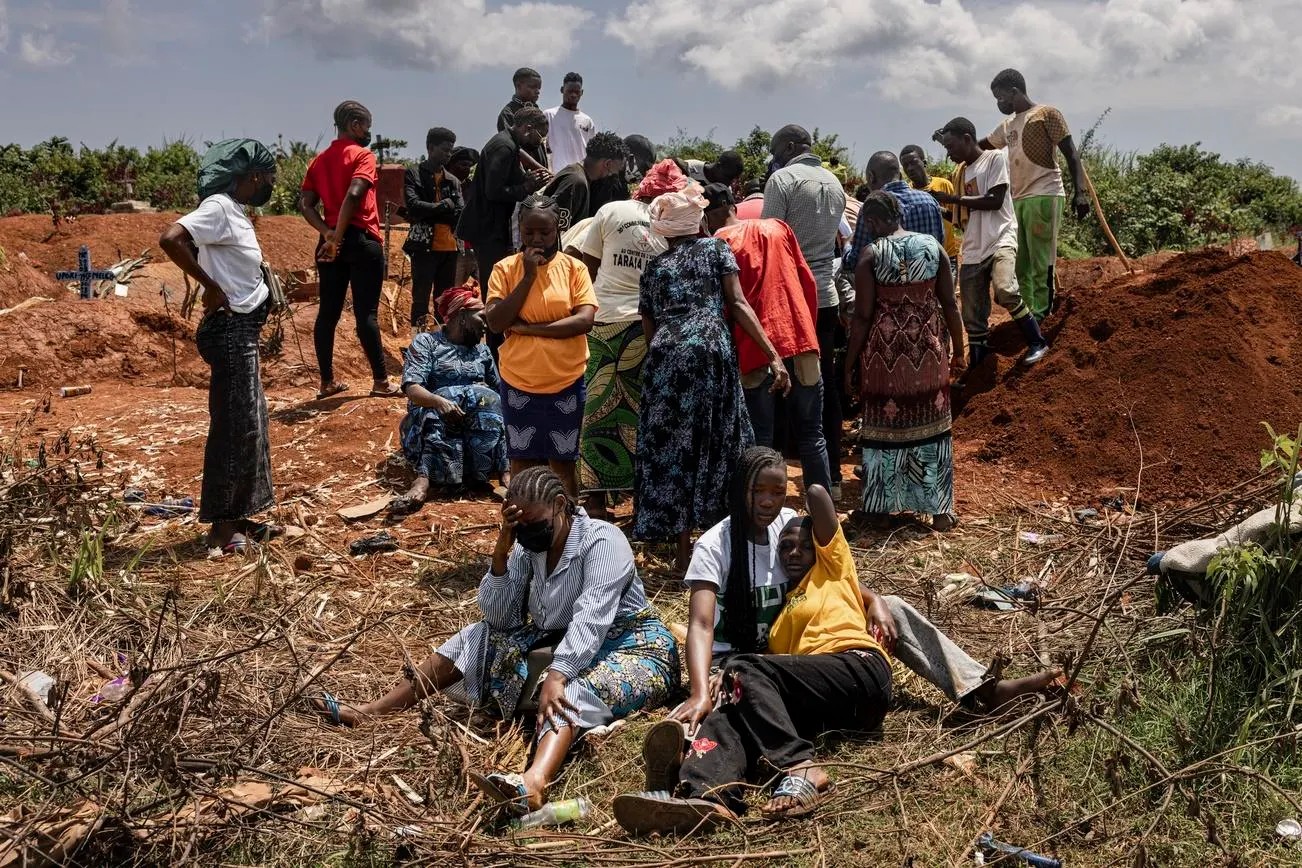
Thirteen front-line health workers were among the dead. The local cemetery was processing up to 20 burials a day.
The earliest specific death they could date belonged to a 50-year-old woman on the town’s outskirts. She vomited blood and died on January 25. Her mother followed six days later. Her husband got sick, but survived.
“Dhenyo was right. In a gold-mining town, Ebola looks like malaria. It looks like typhoid. It looks like a bad month.”
Why Epidemiological Models Missed the January Start
If 500 people died by April, why did every major model point to spring?
Science published these findings in late July. Yet prior to that, the scientific consensus placed the origin months later. A CDC team writing in the Morbidity and Mortality Weekly Report (MMWR) in June estimated the spillover occurred in “mid to late February.”
Other teams were also off. Researchers at the London School of Hygiene & Tropical Medicine—including Sam Abbott and Sebastian Funk—used nowcasting to place the start between March 1 and March with 90% probability.
Even genomic analysis lagged. An early July study led by Congo’s Institut National de Recherche Biomédicale, involving veteran virologist Jean-Jacques Muyembe-Tamfun, traced the family tree of sequenced viruses. Their data suggested mid-March. Some intervals stretched back to early February. But January remained outside the window.
Jean-Jacques Muyembe-Tamfu knows what he is doing. He collected the blood sample that identified the Ebola virus in 1976. He directed the 2018 east Congo response. His team knows the limits of their data.
Andrew Rambaut, an evolutionary biologist at the Univ. of Edinburgh who collaborated on the analysis, noted the data gap. He told Science that January was plausible. They simply didn’t have enough sequences from Mongbwalu to prove it genetically.
The Gap Between Data and Reality
This isn’t a failure of the models. The models are working exactly as designed.
Models of this type are fitted to case notification data. You need data to fit. Before a surveillance system exists, there is no data to fit. So, the models rely on an assumption near the beginning of their data window.
When the CDC or the London School of Hygiene teams run their algorithms, the date they call the start is often just the date someone started writing things down. It is the start of the recorded epidemic, not the lived one.
Each layer of evidence sees further back.
Diagnostics see the first positive lab test.
Models see the first recorded clinical case.
Fieldwork sees the funerals.
The funerals happened in January.
Where and How the Virus Spread Before Detection
The Bundibugyo virus moved through the community long before the alarms sounded. The surveillance system was blind to the specific presentation of the disease in a high-stress, drug-using mining town.
Malaria symptoms? Typhoid fever? A bad month of general illness? These covered the tracks of the hemorrhagic fever. The Bundibugyo strain doesn’t present with the textbook severity that triggers immediate red flags in early stages, especially when masked by other endemic illnesses.
This raises a critical question for future outbreak responses: How do we detect a virus that masquerades as common ailments in high-risk environments?
The Bundibugyo outbreak was not just a biological event. It was a social one. Tramadol use. Diazepam intake. Gold mining. All of these factors contributed to a health environment where the first signals were interpreted as noise.
We are looking back now with the benefit of field interviews that didn’t exist in May. We know the cemetery was full. We know the health workers were dying. We know the virus was circulating in mid-January.
The models will adjust. They always do. But for those three months, the outbreak happened in the shadows, counted only by the mourners standing in the graveyards.
The official calendar says May. The ground says January.