


you stand there My hand hurts. Stir. The sauce was too thin. The lump remains. Grilled food awaits. No one likes to admit it, but many of us have secretly started using an immersion whisk to save dinner. It happens. Winter continues. Comfort food dominates the menu. Before the spring vegetables arrive, it’s important to master the iconic French béchamel sauce.
But do we really need the old-fashioned way of complicating a simple recipe?
The technical details often missing from classic cookbooks make this task easy. Energy consumption is also reduced. The secret lies not in tradition but in physics.
Pitfalls of traditional white sauce production
Culinary imagination and reference works describe the preparation of béchamel strictly according to plan. The script never changes. On one stove you can see the roux (butter and flour). Meanwhile, heat the milk in another saucepan. This technology was born in professional kitchens, where every workstation is assigned. This does not make sense in modern home kitchens.
Monopolize two burners. The number of dishes that can be washed doubles. For those looking for an eco-friendly approach, boiling excess water or milk before disposing of it is a no-brainer. It consumes energy and water.
Preparing for both at the same time can be stressful. It must be ensured that the milk does not boil or overflow. You have to be careful not to burn. Chefs easily avoid such gymnastics. Many people rely on boxed sauces. These products generate more waste. They often contain additives and preservatives.
Homemade food should be healthy and zero-waste. It shouldn’t be complicated. Too many steps can take the fun out of cooking.
Time-Saving Myths That Failed
It is generally believed that pouring hot liquid into the butter and flour mixture speeds up the preparation of béchamel. This seems logical. Since you have to cook the sauce, why not start with all the ingredients at the same temperature?
Reality says otherwise. Preheating milk takes time. The total cooking time is not reduced. Time is wasted waiting for the milk to boil. Special care must be taken when pouring boiling liquid into hot roux to avoid disaster.
This ancient technique greatly increases the risk of burning the bottom of the pan. Pouring hot milk into a hot roux can cause serious reactions. Starch expands too quickly. Forms clumps that are difficult to homogenize. The chef has to stir the mixture like crazy to keep it together. The bottom is stuck. The sauce has a very bitter taste.
Preheating milk is, contrary to its goal, the best way to complicate or ruin a recipe.
Heat shock science
Success requires understanding the simple physics of cooking. This has nothing to do with old beliefs. The real secret is heat shock.
Create a beautiful contrast between the hot roux and the cold liquid to create a stress-free, perfectly smooth white sauce. Conversely, this temperature difference promotes a creamy consistency.
Pour the cold milk into the hot butter-flour mixture to slow the gelatinization of the starch. You can buy yourself valuable seconds. This immediate reaction ensures that the flour is evenly distributed in the liquid before it forms lumps. Cold weather temporarily disturbs the composition of the flour. This gives the whisk time to work efficiently.
Then, as the temperature rises, the mixture thickens evenly. Once you master this principle, you can forget about complicated methods. You will always succeed.
Quick tips: step by step
Use this game-changing tip by starting with roux. Lightly melt the butter in a saucepan until frothy. Add the flour. Mix vigorously for 1 minute. This will “cook” the flour and eliminates any raw dough taste.
The next step changes everything. This shows the time savings.
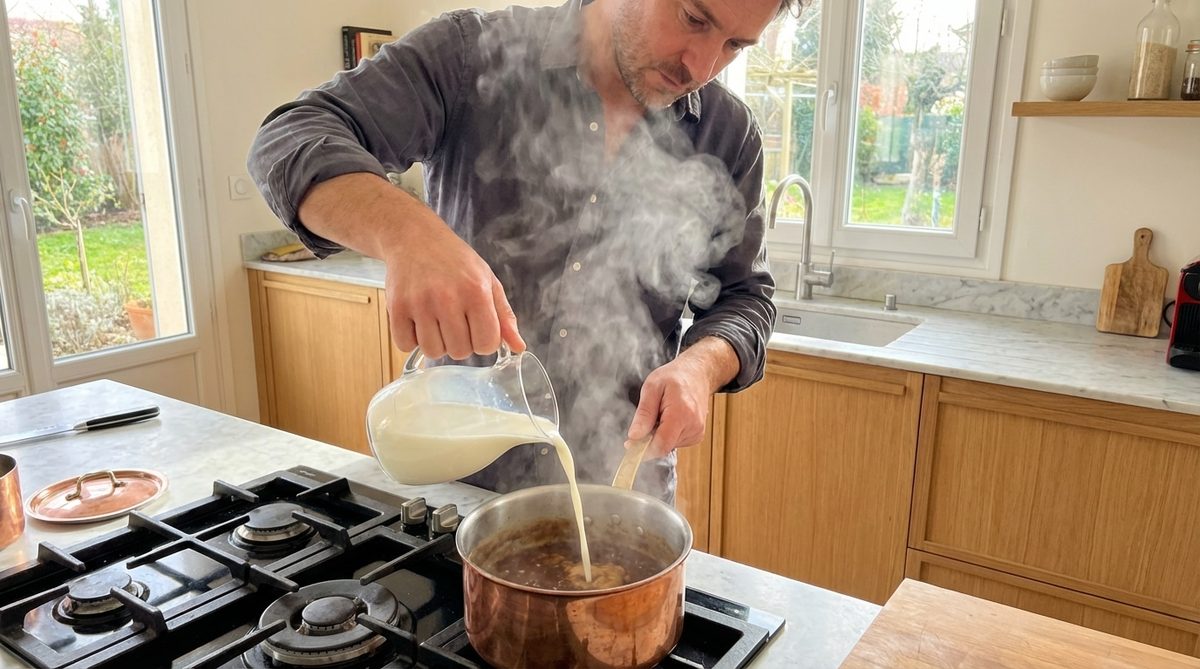
Forget adding milk gradually. Forget endless scooping. The most effective way is to pour cold milk from the refrigerator into the hot roux all at once.
Don’t be shy. Pour it all. It seems wrong. This is the easiest and most reliable way. Cold milk interrupts the cooking of the roux. Prevents burning. Creates a thermal shock that is useful for successful sauces.
Why follow the rules of failure? The science is clear. Cold milk works well.
Make a silky white sauce using the cold milk technique
Everything changed when I poured cold milk. The low temperature allows the whisk to break up the flour without resistance. There are no lumps because the starch is not activated by heat. Mix gently. Scrape down the sides of the pan. Don’t worry that the sauce will thicken too quickly.
Heat the pot over medium heat. Stir until the temperature gradually rises. The sauce goes from liquid to coating to creamy. It only takes a few minutes. The result is a shiny and smooth sauce. It’s like a high-end restaurant. You did it quickly. It can be stress free. The finish is perfect. It complements any food.
Master the irresistible gratin sauce
Now you have the key to a foolproof white sauce. Let’s put it into practice. Make a hot roux. Pour in the cold milk all at once. Whisk. Heat. Season at the very end. Finally, add nutmeg, salt and pepper. The bland sauce ruins the delicious vegetables.
Make the most of late winter vegetables in March. Prepare hearty vegetarian meals and reduce food waste. Use cauliflower stems. Don’t throw it away. Peel them. Dice them. Add them to the dish. You can save food and get taste.
Recipe: cauliflower-broccoli conte gratin
This is the true cold milk method.
- 1 medium cauliflower
- 1 piece of broccoli
- 50 g of butter
- Flour 50 g
- 700 ml milk (very cold)
- 150 g of grated fruity Comte cheese
- Nutmeg, salt and pepper
- A handful of pumpkin seeds
Wash the cauliflower. Cut into florets. Steam the vegetables for 10-12 minutes. Keep it crunchy. Save the vitamins. Prepare a simple sauce using the cold milk technique described above. When it thickens, take it off the heat. Add two-thirds of the grated Comté. Melt it.
Put the vegetables in the baking dish. Served with a rich cheese sauce (Mornay). Sprinkle the remaining Comte and pumpkin seeds on top. Bake at 200℃ for 20 minutes. The top should be golden brown. Simple. Seasonality. Family approval.
Why thermal shock works
This method is based on thermal shock between high and low temperatures. Cooking at home also turns out to be simple and effective. By streamlining your movements, you can prepare food from scratch more often. Reduce dependence on ready meals. Rediscover the joy of cooking. This trick will change your everyday life.


