Spring air hits different. It smells like orchards. And when that happens, you want one thing: a cake that smells like warm butter and vanilla. Not just any apple cake. One that feels like a hug.
The secret isn’t complicated. It’s French. It’s borrowed. You take the base of a madeleine—the tiny shell-shaped cakes you see in every Parisian bakery window—and you stretch it. You turn it into a loaf. The result is airy. It’s tender. It crumbles like a pillow.
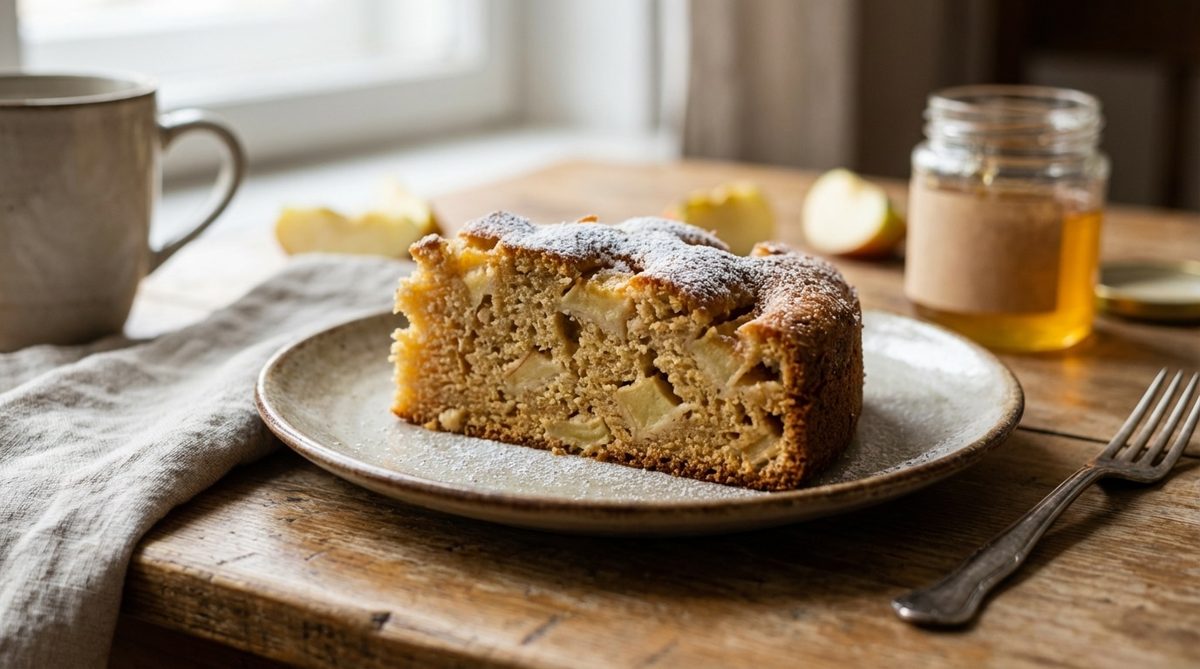
This isn’t a dense fruit cobbler. It’s a sponge. A light, buttery sponge loaded with diced apples. The apples don’t turn mushy. They hold their shape. The crumb stays moist. Long after the last bite, the flavor lingers.
Why the Madeleine Base Changes Everything
Most apple cakes use a heavy batter. Or a biscuit-like base. This one uses a pâte à madeleine base.
Think about the texture of a madeleine. It’s crisp on the outside. Soft and airy inside. It dissolves on the tongue.
By using this batter, you get that same lightness. But scaled up. It’s no longer a bite-sized snack. It’s a centerpiece.
The dough is simple. Butter. Eggs. Sugar. Flour. Baking powder. That’s it.
But the technique matters. You don’t just mix it. You beat the eggs and sugar until they are pale and thick. This traps air. The air expands in the oven. The cake rises. It doesn’t collapse.
And the apples? They are diced. Not sliced. Not grated. Diced into 1 cm cubes.
Slices can slip to the bottom. Grated apples turn the cake into a wet mess. Diced cubes stay suspended. You get a bit of fruit in every slice. No soggy pockets. Just consistent, moist pockets of apple.
Ingredients You Need
You need specific tools. A cake tin. A mixing bowl. A whisk. A spatula.
The Madeleine-Style Batter
- 3 eggs : Room temperature is best.
- 160 g sugar : White granulated sugar.
- 1 sachet of vanilla sugar : Or 1 tsp vanilla extract.
- 170 g flour : All-purpose is fine.
- 10 g baking powder : Fresh. Old baking powder makes flat cakes.
- 150 g butter : Unsalted. Melted and cooled slightly.
- A pinch of salt : To balance the sweetness.
The Fruit Component
- 3 apples : Golden, Reine des reinettes, or Pink Lady. You want apples that hold their shape. Avoid baking apples like Granny Smith if you want them to melt slightly. You want them tender, not hard.
- 1 tbsp lemon juice : To prevent browning.
- 1 tbsp sugar : Optional. If your apples are tart, use it.
- 1 tsp cinnamon : Optional. Adds warmth.
For the Pan and Finish
- 15 g butter : To grease the tin.
- 1 tbsp flour : To dust the tin.
- 2 tbsp flaked almonds : Optional. Adds crunch.
- 1 tbsp pearl sugar : Optional. Adds a sweet, crunchy crust.
Step-by-Step Method
Start with the apples. Peel them. Remove the cores. Cut them into 1 cm cubes. Be precise. If they are too big, the center stays raw. Too small, and they turn to sauce.
Toss them in the lemon juice. Add the sugar and cinnamon if you are using them. Mix gently. You want them coated. Not swimming in liquid. If they release too much water, the cake gets wet. A tiny sprinkle of flour on the apples can help absorb excess moisture, but don’t overdo it.
Now, the batter.
Melt the butter. Let it cool until it is just warm. Not hot. Hot butter cooks the eggs. That’s bad.
In a large bowl, whisk the eggs and sugars. Whisk hard. Until the mixture is pale, thick, and ribbons form when you lift the whisk. This step is non-negotiable. This is where the air goes in.
Sift the flour, baking powder, and salt into the egg mixture.
Fold it in. Gently. Do not overmix. You want a soft, supple dough. If you mix too much, you develop gluten. The cake becomes tough. You want tender.
Pour in the warm butter in a thin stream. Fold it in. Then, add the diced apples. Fold them in one last time. Distribute them evenly. You don’t want them all at the bottom.
Prepare your cake tin. Butter it. Flour it. Shake out the excess. Or use parchment paper.
Pour the batter in. Smooth the top. If you are using almonds or pearl sugar, sprinkle them on top now.
Bake at 180°C (350°F). For 35 minutes.
Check it at 30 minutes. If the top is browning too fast, cover it with foil. You don’t want a burnt crust before the center is set.
Test it with a knife. It should come out with a few moist crumbs. Not wet batter. Not dry dust. Moist crumbs. That’s the sweet spot.
Let it rest in the tin for 10 minutes. Then turn it out onto a wire rack.
Why rest? Because the cake is fragile. It’s still setting. If you pull it out immediately, it might break. Resting lets the structure firm up. It also lets the steam escape slowly. This keeps the crumb moist but not soggy.
Texture Secrets: How to Avoid Common Mistakes
The difference between a good apple cake and a great one is texture.
Most people mess up two things. They overmix the flour. They overbake the cake.
Overmixing flour makes the cake dense. You want a cake that melts in your mouth. Like a madeleine. Not a brick.
Overbaking dries it out. The goal is a “cushion” texture. Tender. Soft.
If you follow the steps—beat the eggs, fold the flour, watch the time—you get that result.
The diced apples are key. They provide bursts of flavor and moisture. But they must be uniform. Uniform cooking. Uniform flavor.
This cake is light. It’s not heavy with syrup or glaze. The moisture comes from the apples and the butter. It’s clean. Simple.
Serve it warm. Or at room temperature. It works for breakfast. It works for afternoon tea. It works as a dessert if you add a scoop of vanilla ice cream.
The French love their madeleines. They love their apple cakes. This combines the two. It’s a twist on tradition. A little shortcut that feels like magic.
You’ll smell it before you taste it. Butter. Vanilla. Cinnamon.
And then that first bite. Crisp edge. Soft center. Apple chunks that give way to sweetness.
It’s simple. It’s reliable. And it tastes like spring.
The base is forgiving. It accepts change well.
Start with the scent. Vanilla takes the lead, but you can shift the profile. Add a spoon of amber rum for depth. Or use lemon zest if you want something brighter, more spring-like. The batter loves orange blossom water. It smells like childhood snacks. Sweet. Distinct.
Push the richness further.
Place a spoonful of salted butter caramel in the center of the batter before it goes in the oven. The heat melts it. The middle becomes liquid. Warm and gooey.
Then add texture. Almond flakes break up the softness. They provide a crunch that mimics the golden edges of a fresh madeleine.
Storage matters, but not much.
Keep it at room temperature. Wrap it tight. If it feels stale, hit it with a brief burst in the oven. This wakes up the butter. It brings back the aroma of apples.
Serve it cold against hot.
A dollop of thick cream. A cup of cold plain yogurt. Or a scoop of vanilla ice cream. The temperature contrast works. You will likely want another bite.
The core idea remains simple.
A madeleine-style base ensures an ultra-soft crumb. Dice the apples so every slice has fruit. Once you master the bake and the gentle release from the mold, the rest is optional.
Pick a scent. Add crunch. Choose a topping.
What if you swapped half the apples for pears? Just to test the limits of that softness?