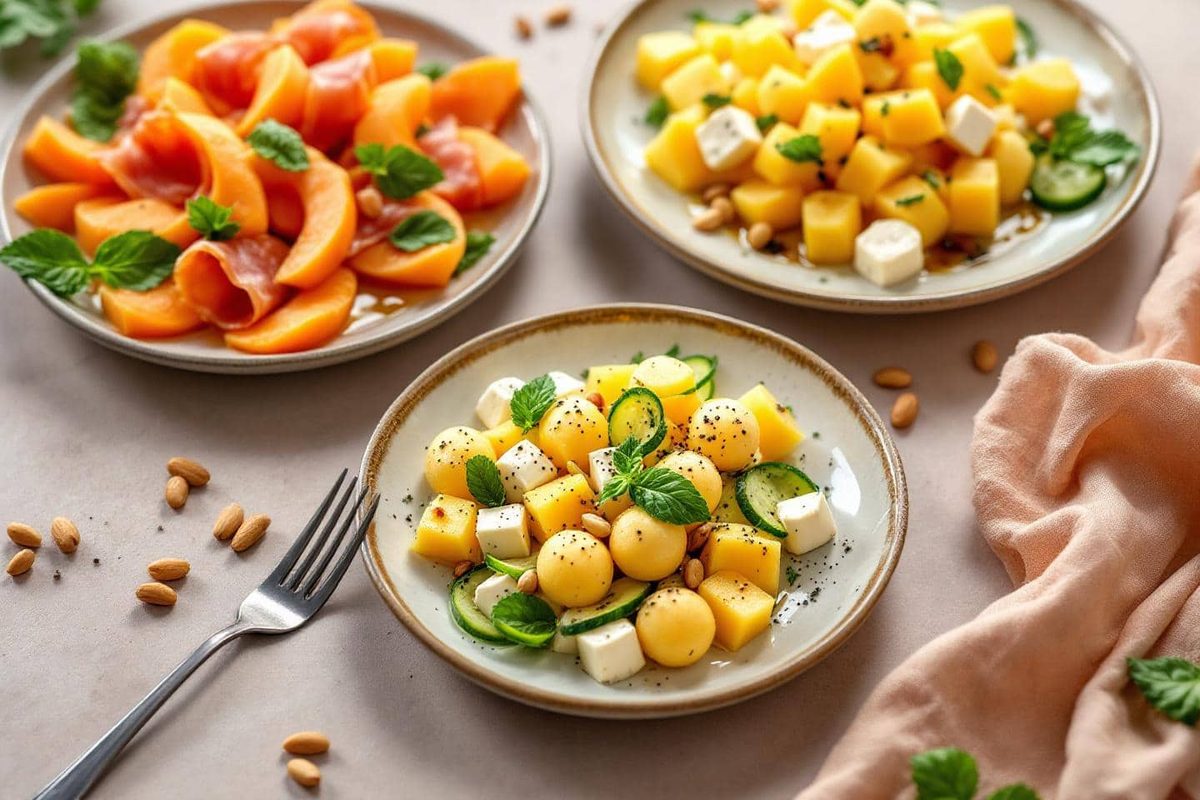
When the sun finally breaks through the clouds over France, the melon calls. It is the official symbol of vacation, leisure, and long evenings. This fruit, stuffed with sugar and light, arrives in July to color aperitifs, refresh starters, and open the dance of dinners with friends.
Nothing beats an improvised recipe. Light. Energetic. Perfect for celebrating the fizz of warm nights on a terrace or by the water.
Here is the promise of three creations based on melon. They are easy to make. They are overflowing with flavor. It is an assurance of a gourmet, carefree moment.
Melon, Cured Ham, and Mozzarella: The Sunny Trio
This combination works because of contrast. Sweet fruit. Salty meat. Creamy cheese.
The Ingredients
You need simple components for this melón, jambon cru et mozzarella dish.
- 1 large Charentais melon, fully ripe
- 100 g cured ham (jambon cru) in thin slices
- 125 g mozzarella di bufala
- 10 fresh basil leaves
- 2 tablespoons extra virgin olive oil
- Freshly ground pepper
How to Build It
Cut the melon in half. Scoop out the seeds gently with a spoon. Slice the flesh into regular wedges.
Arrange the melon slices on a large platter. Tear the buffalo mozzarella by hand. Place the cheese pieces between the melon wedges. Fold the cured ham strips and tuck them in.
Drizzle generously with olive oil. Chop the basil finely. Sprinkle it over the top. Add a crack of black pepper.
Serve it cold. The goal is to feel the contrast between the melting texture of the melon and the lactose sweetness of the mozzarella. The cured ham adds a salty kick.
Serving Suggestions
This trio shines when placed at the center of a large table. Arrange it in a spiral on a colorful platter.
For individual plates, add a few extra melon wedges. Serve with crunchy grissini. A chilled glass of Provence rosé fits perfectly. Old-fashioned country bread completes the look. It recalls sunny aperitifs in the South of France.
The juicy freshness of the melon enhances every bite. It creates an authentic summer experience.
Express Melon and Mint Granita: Five-Minute Refreshment
Granita is not just ice. It is texture. It is memory.
The Ingredients
- 2 ripe Charentais melons (approx. 1.2 kg)
- Juice of half a lemon
- 10 fresh mint leaves
- 2 tablespoons sugar (add more if melons lack sweetness)
The Process
Peel the melons. Remove the seeds. Cut the flesh into cubes.
Put the cubes in a blender. Add the lemon juice. Add the sugar. Tear the mint leaves and drop them in.
Blend for a long time. You need a very smooth, homogeneous puree.
Pour the mixture into a wide, shallow dish. Freeze it for one hour.
Scrape the surface with a fork every 15 minutes. This creates the signature icy flakes. Serve in small glasses or coupes as soon as the texture is granited.
Tips to Elevate the Flavor
Add zest for complexity. Lemon zest works. Lime zest is sharper.
Try a small amount of grated ginger. It adds heat.
A few drops of orange flower water introduce a floral note.
To serve, place it on a plate. Top with fresh mint leaves. Add a spoonful of Greek yogurt for creaminess. It becomes the perfect end to a meal on a terrace.
Melon Carpaccio with Feta and Toasted Pine Nuts
This is chic. It is light. It looks impressive but takes minutes.
The Ingredients
- 1 firm melon
- 80 g feta cheese
- 30 g pine nuts
- A handful of arugula (rocket)
- Fleur de sel
- Black pepper
- 1 tablespoon olive oil
The Steps
Use a mandoline or a very sharp knife. Slice the melon into paper-thin strips.
Arrange the slices in a rose pattern on large, flat plates.
Toast the pine nuts in a dry pan. Keep an eye on them. They go from golden to burnt quickly. Stop when they are a nice golden color.
Crumble the feta over the melon. Scatter the arugula on top. Drizzle with olive oil.
Finish with fleur de sel and black pepper.
Serve at room temperature. The crunch of the pine nuts and the salty softness of the feta highlight the freshness of the melon.
Subtle Touches for a Restaurant Look
Hide fresh raspberries under the melon slices. The color contrast is striking.
Add aromatic herbs. Mint or basil works well.
A dash of reduced balsamic vinegar adds depth.
The plating style matters. Play with transparency. Layer the flavors. It impresses guests without effort.
These recipes rely on the quality of the fruit. A ripe Charentais melon changes everything. It is sweet. It smells like summer.
You do not need to cook. You just need to assemble. The heat is already in the kitchen from the stove. The work happens on the plate.
Enjoy the breeze. Eat slowly. The season is short.
Choosing the right melon is not guesswork. It is physics. You are looking for weight relative to size. Pick up the fruit. If it feels heavy for its dimensions, the flesh is likely sweet and juicy.
Smell matters too. A faint aroma at the stem end signals ripeness. Avoid the green smell of under-ripe fruit or the sour note of over-ripe mush.
Check the stem area. If the peduncle—the small stem where it was cut from the vine—starts to detach or shows a slight crack, that is a good sign. It indicates the fruit has fully matured on the vine. Do not force it off. If it comes away easily with a gentle twist, you have a winner.
Once you have your melon, the preparation needs precision. Use a sharp knife. Remove the rind completely. The bitter outer layer ruins the texture of the dish. Scoop out the seeds. They are a nuisance in salads. Cut the flesh into wedges or cubes, depending on your recipe.
Store it correctly. If you are not serving it immediately, keep the cut pieces in an airtight container in the refrigerator. This preserves the flavor and prevents the melon from absorbing odors from other foods. Whole melons stay at room temperature until they are ripe. Then, move them to the cold.
Storage and Creative Variations
Melon is versatile. It does not have to be a simple slice on a plate.
If you have an abundance of fruit, turn it into a chilled soup. Blend the melon with a squeeze of lemon juice. The acidity cuts through the sweetness. Add a pinch of salt. It enhances the natural sugars. Serve it cold. It is refreshing.
Smoothies are another option. Blend melon with yogurt or milk. Add ice. Drink it quickly. The texture changes, but the flavor remains bright.
Skewers offer a visual twist. Alternate melon cubes with red berries. Strawberries. Raspberries. Blueberries. The colors pop. The flavors complement each other.
Experiment with spices. Cumin pairs surprisingly well with melon in savory dishes. Mint adds freshness. Lime juice brings zing. Blueberries add a tart contrast.
These combinations are simple. They require minimal effort. The result is a dish that feels special.
Melon is not just a snack. It is a canvas. Use it to elevate an appetizer. Serve it with prosciutto. Pair it with cheese. Let the fruit shine.
The goal is simplicity. Let the quality of the melon do the work. Avoid masking the flavor with heavy sauces. Keep it light.
Who resists the taste of summer? Melon captures that feeling. It is crisp. It is sweet. It is clean.
Incorporate it into your meals. Try a new combination. See what works. The possibilities are endless.