People call it “The Great American Race.” They call it the Super Bowl of stock car racing. But unlike just about every other major sporting event out there, the Daytona 500 refuses to let corporations buy its name. You’ll never see a sign for “The ACME Weed-Whacker 500.” Or “The Yoo-hoo 500.”
It’s just the Daytona 500. Proud. Unique. Special.
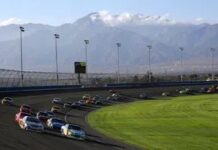
That isn’t marketing speak. It’s fact. This is the biggest, baddest race on the planet. Daytona International Speedway sits in sunny Daytona Beach, Florida. The track is 2.5 miles of asphalt. It’s Lambeau Field at 200 mph. It’s Wrigley Field on two wheels.
Daytona holds 500 miles of legend. White knuckles. Goose bumps.
We’ve dug through five decades of thrills and spills. We pinpointed the top 10 Daytona 500s of all time. The list features daredevils. Names like “Fireball.” “The King.” “The Intimidator.” Heroes known only by their first names. Mario. A.J.
Strap in. It’s going to be a wild ride.
10: The 1962 Daytona 500
Before you had the modern era of superspeedway chaos, you had this. The 1962 race. It wasn’t just a race. It was a statement.
David Pearson took the checkered flag. He drove a Ford Thunderbird. The car was powered by a Ford V8 engine. Pearson led 189 laps. That’s a dominant performance. He won by 17 seconds.
But the story isn’t just about the winner. It’s about the field.
The grid featured 39 cars. That was a large field for the time. It included future Hall of Famers. Fireball Roberts. Curtis Turner. Speedy Thompson.
Roberts finished second. He was only 4.5 seconds behind Pearson.
Turner took third. He was 10 seconds back.
Thompson finished fifth. He was 14 seconds behind the leader.
This wasn’t a procession. It was a battle. Pearson held off a pack of talent that would have been intimidating in any decade.
The race lasted 3 hours, 17 minutes, and 14 seconds.
Average speed was 121.015 mph.
Top speed reached 139 mph.
The weather was cool. 68 degrees at the start. Clear skies. Perfect conditions for speed.
Pearson’s victory was his first Daytona 500 win. He would go on to win again in 1966. And 1968.
But 1962 was the beginning of his legacy.
The car was a 1962 Ford Thunderbird. It was modified heavily. Stock car rules were looser then. You could modify more parts. The engines were bigger. The aerodynamics were crude.
It was raw. Fast. Dangerous.
Pearson’s win was clean. He didn’t crash
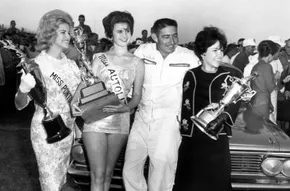
Glen “Fireball” Roberts took the checkered flag, winning by a commanding 27-second margin. This specific race sits at No. 10 on our list not because it was the most technically perfect drive of his career, but because it marked his arrival as one of NASCAR’s original true superstars.
His nickname had nothing to do with racing. It came from his high school days as a baseball pitcher whose fastballs were so hot they practically caught fire. On the track, he brought that same explosive energy. He was a dominant force in the 1950s and early 60s, but his hometown of Daytona Beach, Florida, was a cruel mistress.
The irony was palpable. In 1955, he crossed the finish line first on the beach course only to be disqualified on a technicality regarding his machinery. Six years later, in 1961, he was cruising toward victory in the Daytona 500 before his engine blew out, ending his day abruptly.
The 1962 Daytona 500 was different.
Roberts wasn’t just racing; he was seeking redemption. Before taking the green flag, he stuck to his ritual: a pre-race bologna sandwich. He strapped himself into the car ready to settle the score.
“On February 18, 1962, time stood still.”
The race boiled down to a fierce duel between Roberts and Richard Petty. Petty was young, hungry, and just beginning his ascent. Roberts held him off. He pulled away by 27 seconds, leaving the future legend in his dust.
It was a historic moment. Petty would go on to win a record 200 NASCAR races. Roberts’ career was cut short two years later in a gruesome crash at the World 600 in Charlotte, North Carolina. But that day in February 1962, he beat a legend in the making. He finally left a lasting mark on his hometown.
9: The 1967 Daytona 500
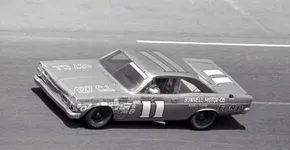
Winner: Mario Andretti
Margin of victory: under caution
Why it’s No. 9: Andretti’s victory in the 1967 Daytona 500 brought serious attention to a sport that badly needed it. At the time, NASCAR was merely a provincial happening, its good ol’ boy fan base located in the Southeast. The national spotlight shined on Indy cars — sleek, open-wheel bullets that were the epitome of cool. And no Indy car driver was more cool or famous than the 27-year-old-Andretti, who had won the series championship in 1965 and 1966.
In the winter of 1967, Andretti decided to head to Daytona, the land of bulky, rumbling stock cars. Would Andretti measure up — literally? He was so short that his Hush Puppies wouldn’t reach the gas pedal. (No kidding — he raced in Hush Puppies.)
Car owner Smokey Yunick compensated for Andretti’s, er, shortcomings by building a longer gas pedal. And once the 1967 Daytona 500 started, Andretti stood tall, just as he had racing Indy cars. He mashed the pedal to the floorboard and kept it there for 500 miles. Andretti dominated the field, leading 112 of the 200 laps.
But the biggest winner that day was NASCAR. In Victory Lane, a giddy Andretti proclaimed: “You don’t baby a car at Daytona like you do [in Indy cars] at Indy [Indianapolis Motor Speedway]. It’s flat out.”
How Mario Andretti Defeated NASCAR in 1967
The 1967 Daytona 500 wasn’t just a race. It was a collision of two different worlds. You had the gritty, Southern stock car circuit. Then you had Mario Andretti, the smooth-talking, open-wheel champion who looked down from his perch in the Indy car hierarchy.
Andretti arrived at Daytona as an outsider. A total alien to the culture. The sport needed exposure. It needed a splash. Andretti delivered.
His height was the first hurdle. Not a physical one for his legs, but for his reach. He wore Hush Puppies. Actual casual shoes. When he sat in the cockpit, his feet couldn’t hit the gas. It sounds like a joke now. It wasn’t then.
Smokey Yunick, the legendary car owner, solved it. He didn’t change the car’s philosophy. He just extended the pedal. A simple mechanical fix. But it showed that the giants of NASCAR were willing to adapt for an outsider. They wanted him to succeed.
Once the green flag dropped, the story shifted. Andretti didn’t try to drive like a stock car racer. He drove like a man who had already proven himself on the hardest tracks in the world. He led 112 laps. That is half the race. He dominated.
“You don’t baby a car at Daytona like you do [in Indy cars] at Indy [Indianapolis Motor Speedway]. It’s flat out.”
The quote from Victory Lane wasn’t just bragging. It was an
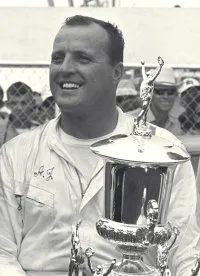
The winner was A.J. Foyt. The margin of victory was a staggering lap-plus. This finish lands at No. 8 on the list of most significant Daytona 500s for a reason that echoes the 1967 race won by Mario Andretti. It wasn’t just about who crossed the line first. It was about the crossover appeal. A massive star from Indy car racing stepped into stock car racing and brought serious prestige to the sport.
Foyt was larger than life. A Texan with a reputation for being reckless and fearless, he made a guarantee before the race that sounded like something Joe Namath would say. He said he would win it. The early laps didn’t look good for that promise. He got buried in traffic. He had to elbow his way past a pack of rough-and-tumble NASCAR regulars who didn’t take kindly to an outsider disrupting their rhythm.
It looked like the bold claim would fall apart.
Then came the closing laps. Richard Petty, the dominant force of the era, suffered a car failure and was sent to the garage. The field opened up. Foyt found himself clear of the pack. He didn’t just hold on. He pulled away.
He crossed the finish line ahead of Charlie Glotzbach by almost two laps. That is the biggest margin of victory in Daytona 500 history. The dominance was absolute.
The NASCAR fraternity had to respect it. Petty, usually quick with a criticism or a sideline jab, simply drawled that Foyt fit right in. It was a rare concession from the king of the track to the king of another oval.
7: The 1994 Daytona 500
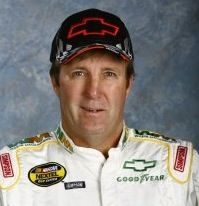
Winner: Sterling Marlin
Margin of victory: 0.19 seconds
Why it’s No. 7: This wasn’t just a win. It was a payoff.
For 17 years, Sterling Marlin lived in the shadows of NASCAR. He drove second-rate equipment, chased second-tier finishes, and survived on grit alone. He paid his dues in the most brutal way possible. Then, near the end of 1993, everything shifted. He landed a top-flight ride with Morgan-McClure Motorsports.
The self-proclaimed country boy from Columbia, Tennessee, finally had his shot at the big leagues. He didn’t just take it. He owned it.
The 1994 Daytona 500: Sterling Marlin’s Breakthrough
The 1994 Daytona 500 became the stage for his redemption. Marlin didn’t flash. He didn’t need to. He worked his way through the pack with methodical precision. Late in the race, Ernie Irvan launched a fierce charge. Irvan pushed hard, closing the gap. But Marlin held his line.
He crossed the finish line first. By a mere 0.19 seconds.
It was his first NASCAR win in 279 starts.
Think about that number. 279 attempts. That is a career defined by near-misses. To achieve that breakthrough in the most prestigious event on the calendar? That’s not just luck. That’s persistence weaponized.
Afterward, in the bright Florida sunshine, Marlin dedicated the victory to his father, Coo Coo Marlin. Coo Coo was a colorful figure in NASCAR history. He raced for 12 years. He never won a race.
“This one’s for Daddy,” Sterling said. “He ran all those years and never won one. This one’s for him.”
The celebration didn’t stop at the track. Back in Columbia, a welcome-home parade wound through rural farmland and onto Main Street. The commotion was so intense that Sterling’s wife, Paula, claimed it “scared the cows.”
Maybe the cows were just cheering.
6: The 1997 Daytona 500
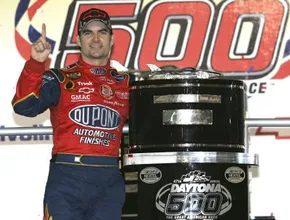
1997 Daytona 500: The Launchpad for Jeff Gordon
The winner was Jeff Gordon. The margin of victory? The checkered flag waved while the field was under caution. But don’t let the lack of a green-flag finish fool you. This race was the moment the NASCAR world shifted on its axis.
Why does this finish rank so high? Because 1997 marked the arrival of a phenomenon. At just 25 years old, Gordon became the youngest driver in history to win the Daytona 500. That title didn’t just make him a champion; it made him the face of the sport. Today, he is arguably the most recognized name in NASCAR, and that 1997 triumph was the rocket fuel.
The track conditions were electric. Gordon wasn’t just driving; he was battling Bill Elliott for the lead. It was a fierce, side-by-side duel that left Gordon with literal chill bumps.
“It’s an experience I’ll never forget,” Gordon admitted.
But the drama didn’t stop in the front row. The real subplot involved Dale Earnhardt, Gordon’s future arch-rival. Earnhardt crashed hard, ending his competitive run in spectacular fashion. Yet, the “Intimidator” refused to let the car stay broken. He stopped the tow truck, demanded they unhook his battered ride, and somehow coaxed the mangled machine back to life. He crawled into the cockpit and finished the race.
It was a moral victory for Earnhardt. A statement that even broken, he couldn’t be stopped.
5: The 1989 Daytona 500
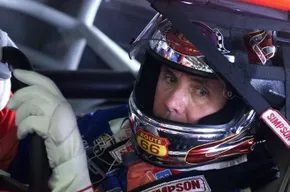
The nickname “Jaws” stuck for a reason. Darrell Waltrip didn’t just drive fast; he talked fast, too. A brash Tennessean who believed in his own hype, he often reminded folks that boasting wasn’t bragging if you actually had the hardware to back it up.
He finally got to prove that point in the 1989 Daytona 500 winner Darrell Waltrip entry.
By lap 149, his car was wheezing. The gas tank was essentially a hollow shell, running on fumes and faith. Most drivers would have lifted off the throttle. Waltrip kept the pedal down. He drifted across the finish line, pulling away from Ken Schrader by a massive 7.64 seconds. It was his first victory at the Great American Race, achieved in his 17th attempt. The car number? 17. Coincidence? Probably not.
The Skeptics Wake Up
The margin of victory was so large it looked like cheating. Or at least, like a miracle.
Dale Earnhardt, who crossed the line in third, wasn’t buying the story. He stared at Waltrip’s machinery with suspicion. “I’d like to get a look at that gas tank,” Earnhardt growled. The implication was clear: no stock car could hold that much fuel.
Another driver, watching from the pits, put it even more bluntly. “For $5, I’d drink what was left.”
Waltrip ignored the noise. He was too busy celebrating. He spiked his helmet on the track and performed the “Icky Shuffle” in Victory Lane. He knew what he had done.
“This is the race everybody will always remember,” he said. “This is Daytona.”
From Driver to Broadcaster
Waltrip has long since retired from the cockpit, but he never stopped talking. Today, he is a fixture on Fox Sports, providing color commentary for NASCAR telecasts. His award-winning broadcasts are a direct extension of that same personality that won him the 1989 Daytona 500.
4: The 1998 Daytona 500
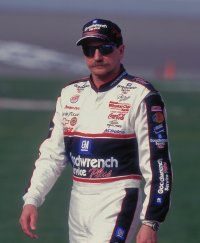
The winner was Dale Earnhardt. The margin? Under caution.
It feels like a cheat code, doesn’t it? But this was the moment the Intimidator finally broke the curse at the World Center of Racing.
Before 1998, Earnhardt was a ghost in Daytona. 0-for-19. You name the disaster, it happened. Blown tires. Wrecks. Dry gas tanks. The universe seemed personally offended by his presence at the start/finish line. He was the baddest dude in racing, yet Daytona wasn’t scared of him. Not at all.
“I don’t know if I’m crazy or determined,” Earnhardt told the press before the race. “But I’m more eager than ever.”
He looked it.
By lap 189, he was leading. He had led 61 of the last laps. The car felt bulletproof. Then, John Andretti spun. The caution flag waved. The field froze.
The race was over before the checkered flag could fall.
Earnhardt didn’t need to cross the line. He just had to stay ahead.
As he coasted down pit road, the usual hostility vanished. Rival pit crews rushed out. Handshakes. Pats on the back. The grandstands erupted. It was catharsis on wheels.
“Finally,” he said, climbing out.
One race. One caution. One lifetime of bad luck erased in a heartbeat.
3: The 1959 Daytona 500
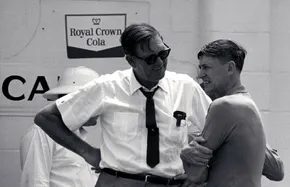
The 1979 Daytona 500 wasn’t just a race. It was a collision of culture, crisis, and car culture that changed NASCAR history forever.
The Context: A Sport on the Brink
By 1979, stock car racing was peaking. But the sport was also facing a perfect storm. The oil embargo had just ended, gas prices were spiking, and fans were tired of paying premium prices for tickets that still felt expensive. Attendance was down. TV ratings were stagnating. The industry needed a spark.
They got a fire.
The Finish: Fire and Steel
With 18 laps to go, the lead pack was a tight cluster. David Pearson, the “Silver Fox,” was pushing hard. Cale Yarborough was right there with him. And then, everything went sideways.
A spin by Baker took out several cars. The leader group broke apart. Pearson and Yarborough were left battling for the win, but the real drama wasn’t just on the asphalt. It was in the stands. It was in the air.
As Pearson and Yarborough crossed the line, fire erupted from Yarborough’s car. Not a small flame. A massive, roiling plume of black and orange smoke that engulfed the cockpit. Yarborough scrambled out of the wreck, his suit smoking, his face masked in soot. Pearson coasted across first.
The Controversy: Who Actually Won?
Pearson crossed the line ahead of Yarborough. But the timing was so close that the official photo finish was inconclusive.
For three days, NASCAR analyzed every frame. They debated tire marks. They questioned the finish line cameras. In the end, they called it. Pearson by a nose. A margin so small it might as well have been zero.
But the victory felt hollow. The sport had been thrust into the national spotlight for all the wrong reasons. Was it the danger? The chaos? The sheer unpredictability?
Why It Matters: The Birth of a Modern Icon
Before 1979, NASCAR was a regional sport with a national fanbase. After 1979, it was a national spectacle with global implications.
The image of Yarborough’s fiery crash became iconic. It was broadcast in slow motion. It was replayed on highlight reels. It reminded millions of Americans that stock car racing was fast, dangerous, and utterly mesmerizing.
“We needed a moment. We got a firestorm.” – Bill France Sr.
The controversy fueled debate. The fire fueled interest. The finish fueled legacy.
The Legacy: More Than a Race
The 1979 Daytona 500 didn’t just decide a winner. It redefined the stakes.
- Safety Improvements: The crash sparked immediate conversations about car construction, fire suppression, and driver protection.
- Television Deals: The dramatic finish led to larger TV contracts, bringing in more money and more exposure.
- Fan Engagement: People who had never watched a race before were glued to their screens. The sport had a new audience.
The Aftermath: Pearson’s Double
David Pearson won his third Daytona 500. He joined Richard Petty and
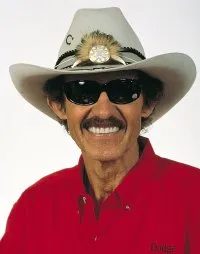
Richard Petty took the checkered flag by a single car length. That margin of victory might seem decisive on paper, but the real story wasn’t on the asphalt. It was in the mud.
The 1979 Daytona 500 remains the most famous race in NASCAR history not because of the winner, but because of the chaos that followed the leaders. While Petty cruised to his seventh title, the infield became the stage for one of the most infamous moments in sports entertainment.
The crash that stopped a lap
Cale Yarborough and Donnie Allison were battling side-by-side for the lead. They were locked in a stubborn stalemate, neither willing to yield an inch as they headed into the final lap. The track was too narrow for both of them.
They collided.
The wreck sent their cars spinning off the track and into the infield. Donnie Allison’s car came to a halt in the muddy pit area. His brother, Bobby, who was running near the back of the pack, pulled over to check on him.
A fistfight on live television
Bobby Allison then did something that would change NASCAR forever. He checked on Yarborough.
Yarborough, a stocky former semipro football player with a known quick temper, was having none of it. Helmets were swung. Fists flew. The brawl spilled out of the wreckage and into the open infield.
“I’d have liked to have stopped and watched,” Petty said later. “It looked pretty excitin’.”
Petty sailed past the melee. He didn’t need to see the action to know it was big.
Why this moment matters for NASCAR viewers
This race was the first NASCAR event to be televised live flag-to-flag. Millions of viewers tuned in expecting a standard race. They got a street fight instead.
The brawl captivated the audience. It humanized the drivers. It showed a side of stock car racing that was raw, violent, and unscripted. The event helped propel NASCAR into the mainstream. It contributed to the sport becoming the second-highest-rated professional sport on TV, trailing only the NFL.
Without that muddy infield altercation, the trajectory of NASCAR’s popularity might have looked very different. The fans didn’t just want to see who was fastest. They wanted to see who was toughest.
1: The 1976 Daytona 500
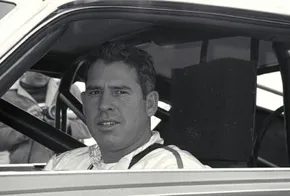
The 1976 Daytona 500 wasn’t just a race. It was a collision of titans. David Pearson took the checkered flag. He won by a margin of just 150 feet. It remains the greatest finish in NASCAR history.
Pearson earned the nickname “Silver Fox” for his cunning driving style. Fans debated who was his equal. Most said only one man: Richard Petty. The “King.” Their rivalry defined an era.
Side-by-side at the limit
On the final lap, the two legends were locked. Side by side. Screaming toward the line. It wasn’t about strategy anymore. It was pure guts. Neither man gave an inch.
Their cars touched. Swerved. Then slammed into the wall. They missed the finish line by only 20 yards. The impact was violent.
Petty’s car was crushed. It spun off the track into the infield and stalled dead. Pearson’s machine was mangled too. But he kept it moving.
The finish that shouldn’t have happened
Pearson didn’t stop. He shouted into his radio. “Where’s Richard!?” He got his wrecked racer refired. He wobbled across the line. Thirty miles per hour. Smoke billowed out. Torn metal clanked against the chassis.
“For a minute, I thought I was going to become the first driver to win the Daytona 500 backwards,” Pearson said later.
He won. It was the ultimate proof of nerve. A test of grit and gumption that few have ever seen matched.
Why this moment matters
This finish settled the debate for many. Petty was the greatest. But on this day, Pearson was faster. And tougher. The crash separated them, but Pearson’s resolve won the race.
The 1976 Daytona 500 still holds a special place in sports history. It wasn’t clean. It wasn’t controlled. It was raw. And it was unforgettable.
Years later, people still ask about that finish. Who held the line longer? Who wanted it more? The answer is in the smoke. In the clanking metal. In the 150 feet that separated first from second.
Pearson crossed. Petty sat in the infield. The Silver Fox had beaten The King. One last time. In the most dramatic way possible.