


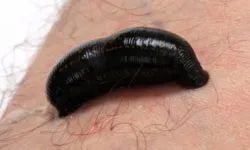
If you watched Stand by Me, you remember the mud scene. River Phoenix, Corey Feldman, and Jerry O’Connell screaming while leeches attach to their arms, backs, and legs. It makes sense why the average person views these segmented worms as purely disgusting. But in a modern hospital, that same biological mechanism saves tissue.
Leeches are not just pests. They are specific medical tools.
How leeches help save skin grafts
The primary modern use for medicinal leeches involves skin grafts. When a doctor transplants tissue to treat burns or other injuries, the new site often struggles with blood flow. Veins may be blocked, causing blood to pool under the graft. If that blood doesn’t move, the graft dies.
This is where Hirudo medicinalis comes in. A doctor attaches the leech to the skin near the graft. As it feeds, it releases a natural anticoagulant. This blood thinner prevents clotting in the surrounding soft tissue.
The leech doesn’t just suck blood; it actively keeps the blood moving to ensure the new tissue survives.
Once the leech fills up, it falls off. The patient continues to bleed slightly from the puncture site. This ongoing bleeding maintains circulation and encourages new vein growth. Depending on the surgery, leeches may need to be replaced every 20 minutes for up to two days, followed by intermittent use for several days.
The history of medical bloodletting
This isn’t new technology. Ancient Greeks and 19th-century European doctors used leeches for bloodletting. They believed in balancing the body’s “humors” by letting patients bleed. Treatments ranged from black eyes and headaches to obesity and melancholia.
In 1883, French medical professionals imported over 40 million leeches for this purpose. The logic was flawed, but the tool was effective at extracting blood. Modern medicine stripped away the “humor” theory but kept the anticoagulant benefits for vascularized tissue.
How the procedure works on the patient
The ick factor is real, but doctors have ways to manage it.
– Numbing: Nerves around the graft or reattached finger are typically numbed during surgery.
– Natural anesthetic: Leechees produce their own anesthetic during feeding.
– Application method: Doctors often use a plastic syringe to apply the leech, reducing direct skin contact.
– Barriers: Gauze is placed around the treatment area to stop the leech from wandering.
Hygiene is strict. Skin is cleaned with soap and water, then rinsed with distilled, non-chlorinated water. Doctors monitor hemoglobin levels regularly to ensure the blood loss doesn’t harm the patient. They also check for infection.
Where to get medicinal leeches
A niche industry exists for these creatures. In 2004, the U.S. Food and Drug Administration approved French firm Ricarimpex SAS to market leeches as medical devices. They joined other suppliers who have provided these animals in the U.S. since at least 1975.
Companies like Leeches U.S.A. sell them for between $9 and $12 apiece. Hospitals typically store them in refrigerators. It’s a specific, regulated supply chain for a very specific job.
Other creepy treatments: Maggots
Leeches aren’t the only unsettling tool in medicine. Many doctors apply disinfected maggots to wounds.
This treatment liquefies dead tissue, kills harmful bacteria, and stimulates healing. Military surgeons developed it after noticing that soldiers with maggot-infested wounds recovered better than those without. It’s not pleasant to look at, but it works.
Medicine often relies on things we’d rather avoid. The leech is one of the best examples of nature solving a problem that synthetic drugs sometimes can’t.


