You can’t watch a NASCAR broadcast for more than five minutes without realizing that every inch of asphalt and steel is owned by someone. It isn’t just the cars. It’s the drivers’ helmets. The pit crew uniforms. The broadcast graphics. The series name itself. It feels like nothing escapes the corporate radar.
But there is a massive, gaping question most fans never ask: How much does NASCAR sponsorship actually cost? And where does that cash vanish?
It’s easy to assume these numbers are astronomical, but the reality is a mix of staggering premiums and surprisingly negotiable deals. To understand the economics of stock car racing, we have to look at the three main series, because each one tells a different story about value and visibility.
The Hierarchy of Series
NASCAR isn’t a single entity. It’s an ecosystem of series, and the naming rights for each are themselves billion-dollar branding exercises. This is why the Sprint Cup (now the Cup Series) dominates the cultural conversation while others fight for scraps.
- Sprint Cup: These are the heavy hitters. Run on Sunday afternoons, 36 times a year, this is where the legends live. Dale Earnhardt Jr., Tony Stewart, Jeff Gordon. This series used to be the Winston Cup Series, showing how sponsorship longevity is part of the sport’s DNA.
- Nationwide Series: Running on Saturdays, this is the development league. It’s less popular, but it runs at the same tracks on the same weekends. Many Cup stars got their starts here. Formerly the Busch Grand National Series, it proves that even the “step below” series has massive legacy value.
- Craftsman Truck Series: The often-forgotten sibling. These trucks race on the big ovals too. Kyle Busch and others compete here. Craftsman tools sponsored it for years, but the series was slated for a new sponsor in 2009, highlighting the fluid nature of these deals.
Since the Sprint Cup is the primary focus for advertisers and fans alike, let’s break down the economics of that specific tier. It is the most expensive set of races in the country.
Breaking Down the Sponsorship Price Tag
When you sponsor a NASCAR team, you aren’t just buying a logo. You are buying access.
A primary sponsor pays between $350,000 and $500,000 per race.
That sounds like a lot. It is. But when you consider that the series title costs millions, paying half a million for a single event seems almost reasonable.
For that half-million-dollar investment, a company gets significant leverage. They choose the paint scheme. They plaster their logo across the hood, doors, and rear quarter panels. They use the driver’s likeness in their own advertising campaigns. You can even sponsor a single race, meaning the car changes its appearance for just that one weekend. It’s a short-term lease on high-visibility real estate.
Beyond the Base Cost
The $350,000 to $500,000 figure is just the entry fee.
Driver endorsement deals? Negotiable.
Window decals? Negotiable.
In-car cameras and telemetry data rights? Negotiable.
The cost of everything else depends on how aggressive the team is and how hungry the sponsor is for brand exposure.
A Brief History of the Buy-In
This isn’t a new phenomenon. NASCAR has been courting corporate dollars since the 1950s, but the strategy has shifted dramatically.
In the early days, sponsors were mostly auto-related businesses. They didn’t even put logos on the cars. It was subtle. It was understated.
Then came 1972. R.J. Reynolds bought the naming rights to the premier series, creating the Winston Cup Series. This was the moment NASCAR sponsorship went from “background noise” to “main character.”
Almost immediately after, Richard Petty’s iconic light-blue #43 car was sponsored by STP, an oil additive. It was one of the first major examples of a non-auto company dominating the livery.
Over the last three decades, the sponsors have evolved. We moved past the alcohol, tobacco, and oil giants of the early years. Now, you see M&Ms on the cars. You see GoDaddy.com on the haulers. The evolution of sponsors mirrors the evolution of the sport itself: from gritty, local races to a polished, national advertising spectacle.
So, when you see that logo on the side of a Chevrolet or Ford, remember: it’s not just a sticker. It’s a line item in a multi-million-dollar budget. It’s a battle for attention in a crowded marketplace. And it’s the engine that keeps the wheels turning.
The question isn’t just how much it costs. It’s whether the brand gets enough eyes on the screen to justify the half-million-dollar price tag.
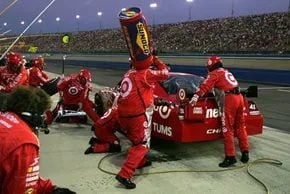

Fuel isn’t just an expense. It’s a bottomless pit. Every NASCAR team needs at least one car and a full pit crew at the track. Then add the driver. Add the owners. Add management. Add every piece of racing gear and tool imaginable.
This logistics chain requires large transport trucks. These beasts drink diesel fuel for breakfast, lunch, and dinner. Consider the math. If diesel sits at $4 a gallon, filling a 300-gallon tank costs $1,200. That is a expensive stop at the pump.
Sunoco supplies free gasoline for the actual race days. Teams don’t live on race day alone. They test equipment for speed and safety. This happens several times a week. Sometimes at non-sanctioned tracks. That means teams pay for their own race fuel. The price hovers around $6.25 per gallon.
An all-day test session burns through a 55-gallon drum. That’s nearly $350 gone before the engine even cools.
Travel adds another layer of cost. Drivers fly from track to track. It’s expensive. Some take the tour bus. That’s almost as pricey. But don’t worry about the driver’s wallet. He isn’t paying for this out of pocket.
In NASCAR, everything is negotiable. The driver’s income is part of that negotiation. Sponsors generally cover salary costs. In return, the sponsor gets a specific number of scheduled appearances. The driver splits race-day winnings with the team. Incentives exist for winning big races like the Daytona 500.
Top drivers bring in fees for additional appearances. They license their likeness to advertisers. The best ones, backed by strong agents, make millions. Jeff Gordon topped the earnings chart in 2008. He pulled in $17 million from endorsements and royalties. Another $15 million came from salary and race winnings. Total: $32 million.
Since negotiation rules the sport, look at the logos. They cover every surface of a NASCAR race car. Why? Because sponsorship is no longer optional.
Driving without a Net
In the early days of stock-car racing, sponsors were rare. When they existed, deals were “in-kind.” A company provided tools or equipment. In exchange, they got a sticker. Or a mention by the driver.
Since sponsorship took hold in the 1970s, running a race without corporate backing is nearly impossible.
Morgan-McClure Motorsports learned this the hard way. The team disbanded its Sprint Cup team for the 2008 season. They had lost their sponsor, State Water Heaters. No sponsor means no car. No car means no season. The stakes have never been higher.
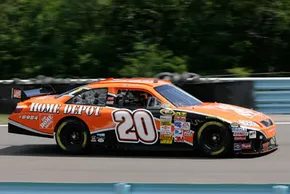
The price tag on a race car isn’t just about who pays. It’s about where that money shows up.
Think of the hood. That prime real estate belongs to the primary sponsor. They pick the colors. They pick the scheme. They get the glory. Everything else? That’s a negotiation.
Associate sponsors fill in the gaps. But not all gaps are equal.
The quarter panels—the strips right in front of or behind the rear wheels—are the luxury condos of car decals. Placing a logo there runs you $1.5 million for a full season. That’s steep. That’s why most brands settle for less.
Where to Put Your Brand for Best Value?
If you can’t afford the quarter panel, look up.
The C-pillar, right next to the rear window, costs about $500,000 a season. It’s noticeable. It’s high visibility. But still a heavy lift.
Then there’s the B-pillar. That’s the narrow strip beside the driver’s shoulder. It’s small. It’s easily overlooked by the casual fan. But for $200,000, you still get a full season of placement. It’s the entry-level luxury.
Some spots don’t cost cash at all.
Craftsman doesn’t write a check. They give tools. The team gets gear. Craftsman gets the logo. It’s an “in-kind” deal. Old school. Still effective for getting names on metal.
Why Are Brands Moving to the Driver?
NASCAR is clamping down.
They’re tightening restrictions on size. They’re moving boundaries. The open fields of stickers are shrinking.
So where do the ads go now?
They went to the people.
Drivers are paid to hold non-alcoholic drinks in the pits. Visible. Clear. On camera. Crew chiefs are paid to mention sponsors in post-race interviews. You hear the brand, you see the face. It’s direct. It’s personal.
It’s not just vanity. It’s math.
Sponsors don’t just throw money at a car for fun. They expect a return.
Who Can Sponsor a Race Car?
You might think NASCAR banned tobacco back in 2004.
They didn’t. The federal government did. The tobacco settlement forced the manufacturers out. NASCAR just followed the law.
There are no hard rules. No official “approved list” of what can sponsor a vehicle. But there are preferences.
Playboy tried. They’ve tried for years. NASCAR said no. The powers that be aren’t interested.
Beer has been there since the beginning. Hard liquor? That took until 2006 to get in the door.
The rule is simple enough: be family-friendly. Don’t step on another brand’s toes. If you’re exclusive, you’re in.
It’s not just about logos anymore. It’s about visibility in a crowded space.
The next question is whether the millions spent actually bring anything back.
Money talks. But does it walk?
That’s where the real story begins.

Calculating the ROI of NASCAR Sponsorship
It is not enough for a company to just write a big check to a NASCAR Sprint Cup team. They need a return that goes beyond simple goodwill. The most immediate payoff is access to a fanbase exceeding 50 million viewers. That is a massive volume of potential advertising impressions.
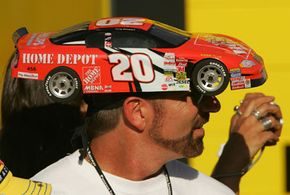
Some firms calculate this return on investment strictly by the numbers. They count the seconds their logo stays clearly visible on the screen. Then, they multiply that time by the standard ad rate. The goal is to see how far their NASCAR dollars actually stretch. A high-profile partnership like Tony Stewart and The Home Depot illustrates this well. It works out pretty well, especially because NASCAR fans have a habit of being loyal to the brands that sponsor their favorite drivers.
But visibility on TV is only part of the equation. Companies also look at print, billboards, internet, and other channels where the team interacts with consumers. They track brand awareness and image shifts resulting from the sponsorship. Promotions tied to the team help determine if the exposure matches their goals. If more people try a product during a sponsored promotion, that is a clear sign of a good return.
Employee morale is another benefit. It often flies under the radar. Imagine how happy you would be if your employer sponsored a winning car. If you sold the most widgets or were voted employee of the year, you might get tickets to a race. This intangible perk helps attract and retain staff.
Why Ratings Soared During High Gas Prices
NASCAR television ratings climbed this spring. So did gas prices. Analysts see two fuel-related reasons for the La-Z-Boy triumph over the bleachers at the track.
First, the cost of driving to the track became prohibitive. When you add tickets and trinkets to the fuel bill, many race fans simply could not justify the trip. Second, nobody is driving anywhere else. The guy who was only an occasional Sprint Cup viewer is now home nearly every Sunday. He is watching the action live because he has nowhere else to go.
Corporate accounting is going to scream for ROI stats immediately. Meanwhile, the marketing team is drooling over skyboxes and endless corn dog buffets. It sounds like a tug-of-war. But in NASCAR sponsorship, nothing is fixed. Everything is on the table for negotiation.
If your firm has already secured a team deal, you might wrangle an appearance by Dale Earnhardt Jr. at your annual picnic. That’s a nice touch for morale. It doesn’t, however, get you grandstand seats. You won’t get a booth either. For that level of visibility, you need track-level sponsorship.
What Track-Level Deals Actually Buy You
Naming a race after your company costs serious capital. We are talking $500,000 to $2 million. The price tag depends entirely on the venue. Lowe’s Motor Speedway, for instance, hosts the Coca-Cola 600. That kind of naming rights comes with a premium. But the perks stack up quickly.
With strong negotiation skills, you can lock down:
- Prominent venue signage
- Logos on tickets and race programs
- Skyboxes and VIP hospitality tents
- Pace car rides
- Exclusive pit tours
- Access to drivers’ meetings
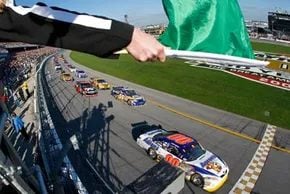
You can even become the Grand Marshal. Waving the green flag or handing the trophy to the winner is a power move. Saying “Gentlemen, start your engines!” is pure cinema. You can probably even negotiate unlimited corn dogs, though that will cost extra.
The Obama Rumor Mill
Let’s look at a real-world example of how these deals play out in the public eye. Back in the summer of 2008, an internet rumor swirled. It claimed Barack Obama was courting red-state voters by sponsoring a NASCAR team. The target was the August 3 Pocono race.
The story fell apart. BAM Racing, driven by Ken Schrader in a Toyota, offered the slot to both Obama and John McCain. Neither candidate took the bait. The rumor died, but the potential remained.
Welcome to the HowStuffWorks 500
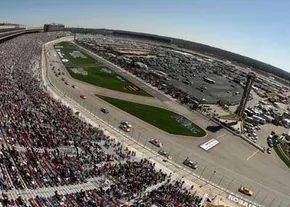

The Real Cost of Naming Rights in Atlanta
If we were serious about running a HowStuffWorks 500, there’s only one logical track. Not Daytona. Not Charlotte. We’d have to go to Atlanta Motor Speedway. It’s the company’s backyard, after all. The place has been grinding out NASCAR action since the gates first opened in 1960. But let’s be clear: it’s not a cheap date.
We’re talking sponsorship fees at the upper end of the spectrum. A single race? You’re looking at a minimum of $1.5 million. That gets you the name rights for the event, sure. You can slap “HowStuffWorks” on any promotion you want. But you don’t get to use the official NASCAR logo on your own website. That’s a separate tax. Still, the reach is massive.
Chasing the Championship Premium
Atlanta hosts two major races in October. The Craftsman Truck Series Georgia 200 and the Sprint Cup Series Pep Boys Auto 500. We’d displace those sponsors. Take both events. Maybe negotiate a slight discount for the double-header.
Here’s the kicker: these dates fall deep in the season. We’re talking about the Chase for the Cup. The top 12 drivers go head-to-head for the championship in the final ten races. It’s high stakes. High drama. That bumps our sponsorship cost closer to $2 million. Why pay extra? Because casual fans tune in for the tension. Die-hards tune in for the glory. More eyeballs means better ROI.
The infrastructure supports the hype. The speedway has expanded over the years to seat 124,000 people, plus 138 luxury suites. In the spring of 2008, a Sprint Cup race there pulled a 5.6 Nielsen Rating. That’s over 4 million households hearing “We’ll be right back with more of the HowStuffWorks 500” before every commercial break.
We also negotiated perks. A skybox. Food and beverages included. The logo on the tickets and programs. Crucially, we aren’t team sponsors. We don’t have to pick a side. We can root for whoever we want. Or no one. The freedom is part of the package.
The Official Sponsor Roster
NASCAR doesn’t just sell track names. It sells a roster of official partners. Some are expected. Sonoco, the Official Fuel. Others are… quirky.
Look at the list.
- AMD : Official Technology Partner, Microprocessor, and Semiconductor Technology.
- Combos : Official Cheese-filled Food.
- Daytona USA : Official Attraction.
- Oral B : Official Oral Care Product.
It’s a ecosystem of branding. From gas to gumption, every angle is covered by a paying partner.
More Great Links
- NASCAR.com
- Verve Sponsorship Group
- Just Marketing International
Sources
- An email interview with Bob Abdellah, Vice President of Global Communications, Just Marketing International. (August 21, 2008)
- An interview with Brian K. Evans, Director of Client Relations at Verve Sponsorship Group. (August 19, 2008)
- Atlanta Motor Speedway. (August 21, 2008) http://www.atlantarace.com/
- Associated Press. “Stop your engines.” Chicago Sun Times. July 12, 2008. (August 21, 2008) http://www.suntimes.com/news/politics/obama/1052699,CST-NWS-race12.article
- Ballparks. “Atlanta Motor Speedway.” June 12, 2001. (August 21, 2008) http://racing.ballparks.com/Atlanta/index.htm
- Hall-Geisler, Kristen. “NASCAR Pays a Whopping $6.25 a Gallon for Gas.” RiverWired. May 12, 2008. (August 21, 2008) http://www.riverwired.com/blog/nascar-pays-whopping-625-gallon-gas
- Modestino, Lou. “TV Times – Atlanta Sprint Cup Race Viewer Ratings Up Over 19 Percent.” MotorSportsNews.net. March 18, 2008. (August 21, 2008) http://motorsportsnews.net/archives/1148
- NASCAR.com. (August 21, 2008) http://www.nascar.com
- Neil, Dan. “Obama goes NASCAR? Not so fast …” Los Angeles Times. July 12, 2008. (August 21, 2008) http://latimesblogs.latimes.com/uptospeed/2008/07/obama-goes-na-1.html
- Schwartz, Peter J. “NASCAR’s Highest-Earning Drivers.” Forbes.com. June 11, 2008. (August 21, 2008) http://www.forbes.com/sportsbusiness/2008/06/11/top-earning-nascar-biz- cz_ps_0611topearningdrivers.html