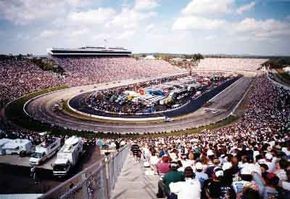
There are about 24 tracks on the NASCAR calendar, and they all work differently. There are ovals, tri-ovals, quad-ovals and road tracks. They also vary in length from half-mile short tracks to a 2.5-mile super speed track. But the geometry that really determines speed and risk is the level of the track.
Physics of steep slopes
Slope is the angle at which the surface of the runway slopes upwards. The steeper the slope, the faster the car can get through the corner. This is where the most fatal accidents happen. Bending at a 90-degree angle creates a vertical wall. Apparently, NASCAR wasn’t such a steep build.
There is no universal standard for how much track should be placed. Angles can have a slope of up to 36 degrees, while straights can only have a slight slope. Road courses usually don’t have banks. Some experts believe that narrowing the corners of the oval could reduce the number of fatal accidents, which have increased rapidly in recent years. Lower cornering speeds mean less kinetic energy is absorbed if something goes wrong.
Concrete walls are less likely to become stopping points
Racing is probably the most dangerous sport on the planet. In NASCAR, drivers drive vehicles that weigh more than 3,000 pounds. They increase the speed of these cars by about 200 miles per hour. Packing increases the risk. On a track only 50 feet wide, the cars raced in tight groups, sometimes groups of three. Collapse is inevitable. The purpose of safety equipment is to minimize injuries when the car deviates from the course.
Almost all tracks have one thing in common: concrete retaining walls. The purpose of these walls is to keep the car on track. However, concrete does not absorb energy. It’s a hard surface. When you hit a concrete wall, all the force is transferred directly to the driver. Most NASCAR drivers who die on the track do so by hitting the wall.
Promotion of soft walls
The industry is looking for alternatives. A proposed solution is to use energy absorbing walls, often referred to as “soft walls”. These systems are designed to dissipate crash energy instead of reflecting it back to the car or driver. This infrastructure change can change the speed of our time and how safely we survive when the inevitable mistakes happen.
The next step is to consider the specific technology behind these new wall systems.